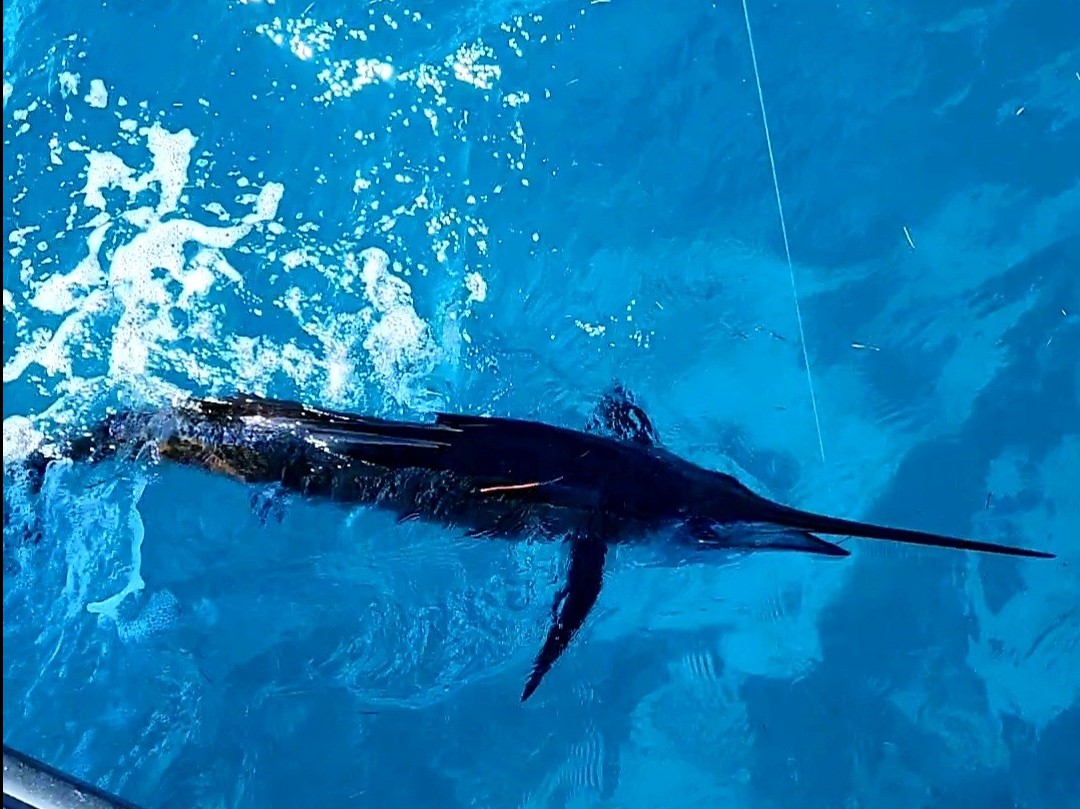






The blue marlin is one of the most challenging billfish to catch on the fly due to its explosive speed and power. Proper drag management and hook-setting techniques are critical for a successful blue marlin release on fly.
The Strike: Setting the Hook
Once a blue marlin takes the fly, the angler must act quickly to set the hook without breaking the tippet. There are two primary methods for achieving this:
1. The Strip Strike
The angler pulls the line with their hand to set the hook.
- Requires precise pressure control to avoid breaking the tippet
- Ensures the hook penetrates the marlin’s mouth properly
- Must clear any excess line smoothly to avoid tangles
“The key is exerting enough pressure to penetrate the fish’s mouth but not enough to break the tippet.” – Nick Smith
2. Hooking with Drag
Instead of using hand pressure, the angler relies on the reel’s drag system to set the hook.
- Pre-strike drag position should be five pounds
- Drag must be tight enough to set the hook but quickly adjustable
- Can be backed off to as little as half a pound to prevent breakage
“A blue marlin can strike at warp speed. The angler must be prepared to back off the drag instantly.” – Nick Smith
Managing the Fight: Drag and Pressure Control
Keeping the Line on the Reel
Once the marlin settles, the angler can gradually increase the drag.
- Maintain steady pressure to tire the fish
- Avoid pumping the rod too aggressively
- Reeling while lowering the rod tip keeps constant force on the fish
“If you drop the tip and lose pressure for even a second, the fish can get its head and throw the hook.”

Adjusting Drag During the Fight
A blue marlin will make sudden bursts of speed, requiring constant drag adjustments.
- Early fight: Keep drag light to avoid breaking the tippet
- Mid-stage: Increase drag to 7-9 pounds once the fish tires
- Jumping stages: A marlin pulling drag rapidly means it’s burning energy
Tackling the Mid-Fight Depth Zone
At some point, the marlin will cruise at a stable depth, conserving energy.
- This is when the angler should apply more pressure to push the fish into action
- Using a direct drive reel allows fine-tuned control over drag pressure
- Always factor in abrasion on the tippet caused by the marlin’s bill and fins
“Many anglers overestimate how much pressure they’re applying. Test your drag with a digital scale before your trip.”
Final Considerations for a Successful Blue Marlin Release on Fly
A blue marlin release on fly requires skill, patience, and proper gear management.
- Keep drag settings in check at every stage of the fight
- Adjust technique based on the marlin’s speed, depth, and direction
- Maintain balance, awareness, and concentration throughout the battle
By following these principles, anglers can successfully release a blue marlin on fly, ensuring both a thrilling fight and a sustainable fishing experience. Written by Nick Smith/InTheBite for InTheBite Magazine website.
For reference on Fly Fishing International Gamefish Association Rules and Regulations follow this link.


Dive Deeper into the World of Sportfishing
You’ve just experienced a taste of the exceptional content featured in the pages of InTheBite Sportfishing Magazine. If you found this engaging, you’re in for a treat with our full publication. Whether you prefer the tactile experience of print or the convenience of digital, we have the publication for you.
Visit our subscription page now to join the InTheBite family and elevate your sportfishing experience with every issue.