




Table of Contents
It was long before social media revealed daily fishing reports that fish flags were used to publicly announce one success on the water.
The Origins of Fish Capture Flags
History credits The Tuna Club of Santa Catalina for the introduction of fish capture flags that were oversized and colored so nearby boats could be alerted to tuna, swordfish and marlin landings.
The concept spread quickly and in 1938 The West Palm Beach Fishing Club conservation committee introduced a red triangular pennant as a method to commemorate a sailfish release. Since, fish flag formalities and expectations have evolved to follow local customs and traditions.
International Code of Signals and Local Customs
A standardized system regarding maritime flags exists within the International Code of Signals but there is no right or wrong way to fly a fish flag. However, there is an informal set of rules that is generally followed by many fishermen regardless of the port of call.
The Intricacies of Flying Fishing Flags
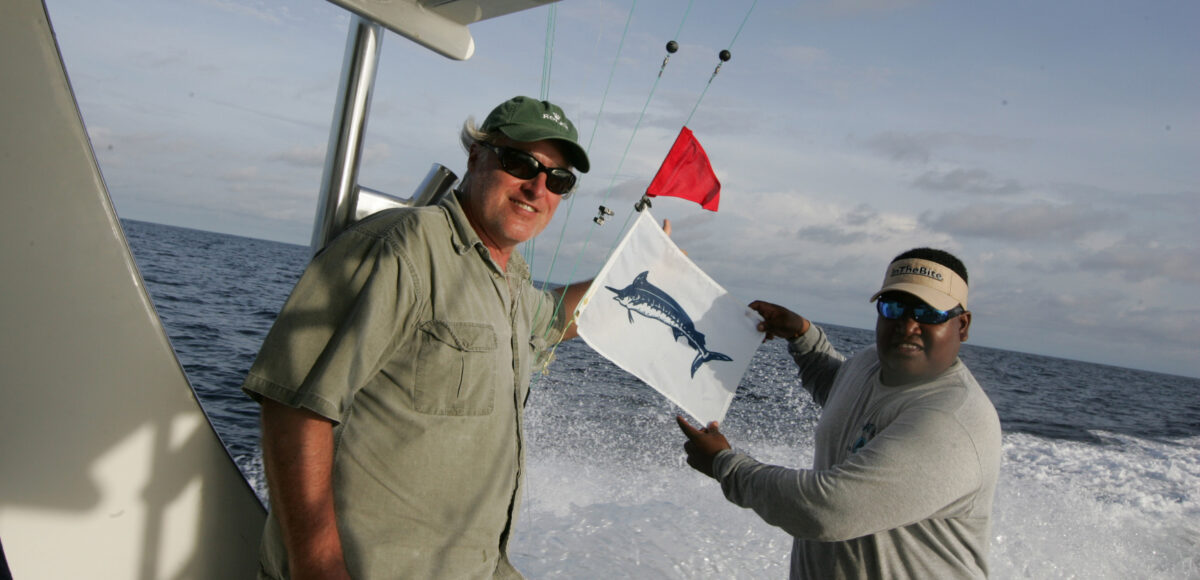
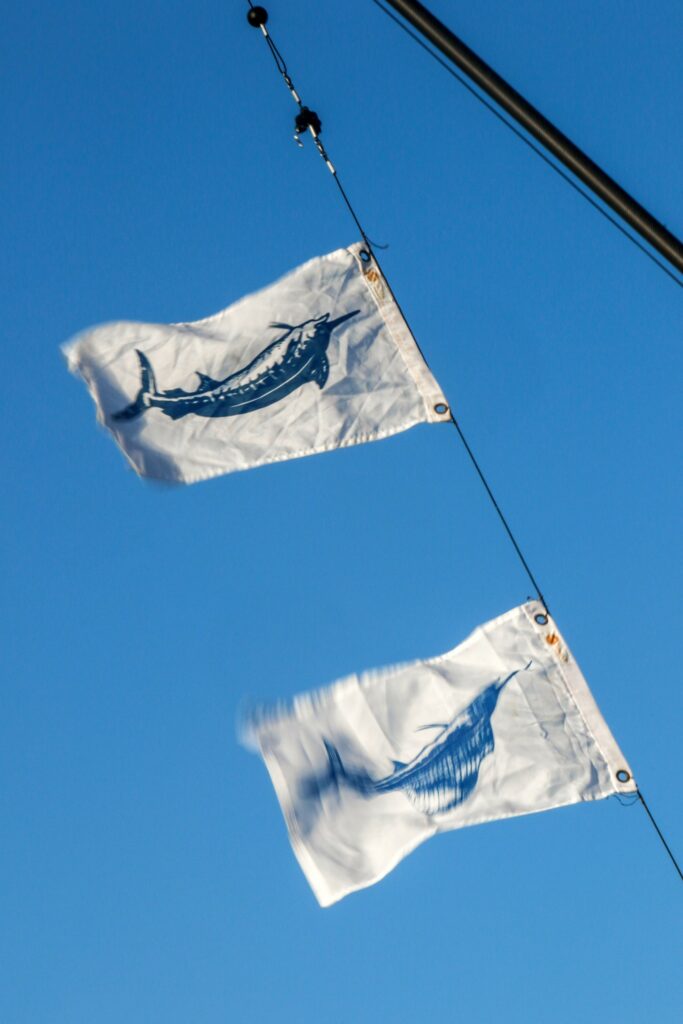
While some anglers still fly a red release pennant with pride, game fish flags are more common and available for a wide range of species. In Hawaii, blue marlin flags portray white-colored marlin designs atop blue rectangles, but in the Atlantic Ocean the pattern is reversed to avoid confusion with white marlin. Here, white marlin flags feature blue rectangles with white-colored marlin.
Sailfish flags are always white with blue fish and mahi-mahi flags are yellow with blue dolphinfish. Fish flags can take on many forms and amid these conventional designs weve recently seen black sailfish flags, pink marlin flags and even the U.S. flag used to signal a release.
Significance and Protocol for Flying Fishing Flags
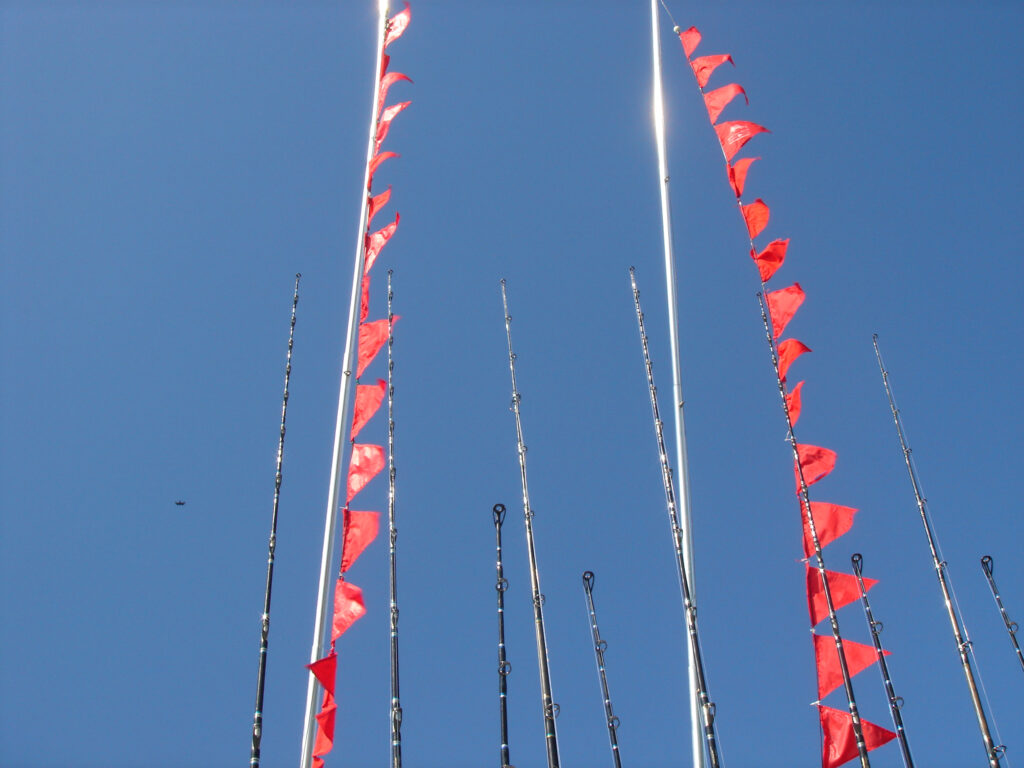
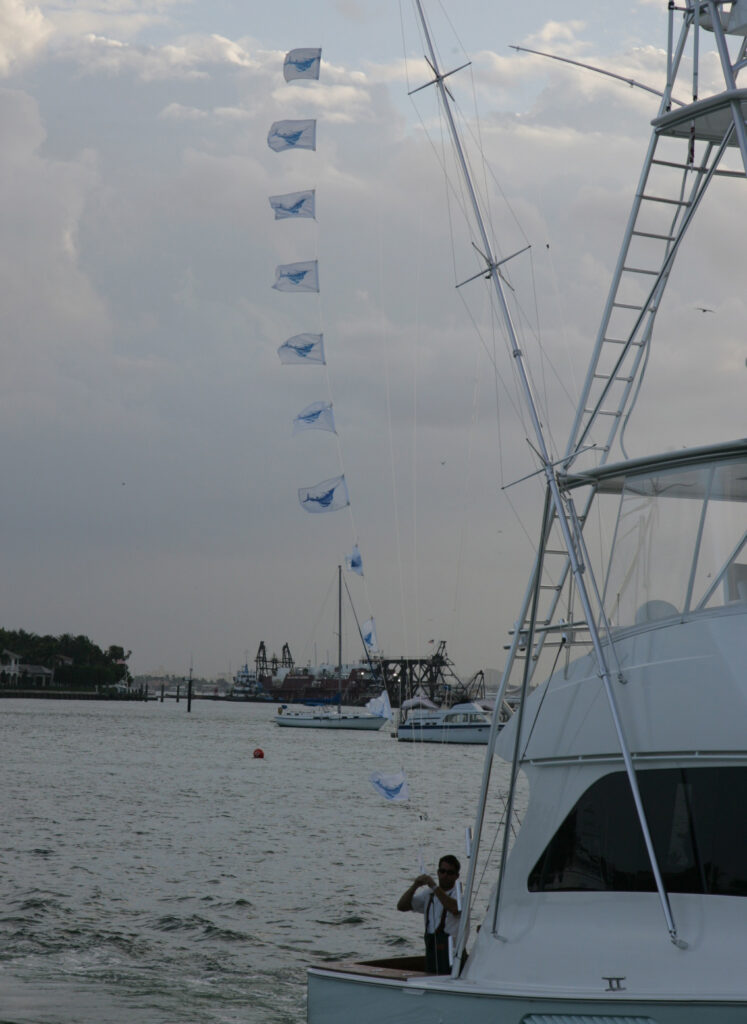
Game fish flags are always to be distributed in order of merit on the starboard outrigger halyard. Blue marlin are at the top, whites and stripes in the middle, sailfish at the bottom. And no matter how many mahi-mahi you catch, you only run one dolphin flag. The red pennant might be the official sign of a release, but counterintuitive with game fish flags are commonly flown upside down to represent a successful catch and release.
A right-side up billfish flag is the customary indication that a fish was harvested and is still the conventional orientation, but a large group of domestic fishermen who would never think to kill a billfish have adopted the right-side up position of flying fishing flags to signify a release since this vertical orientation is the natural posture of a swimming fish. One thing we all agree on is that flags should never hang on the halyard for more than a few hours. Charter boats have a bit more leniency in this regard and might stretch it to 24 hours trumpeting their success in hopes of attracting clients, but aboard private boats this comes off as swaggering self-confidence.
National and Courtesy Flags: Maritime Etiquette
Aside from flying fishing flags, the national flag of the country where your vessel is registered should be displayed from the center flagstaff on the aft end of the tuna tower. If a middle flagstaff is not present, then the starboard staff or antenna is the new staff of honor.
However, in the Caribbean a fresh courtesy flag should be flown off the starboard flagstaff or antenna. If a sportfish tower has three flagstaffs and the captain desires to fly a burgee, national flag and courtesy flag, the proper position would be a national flag center, courtesy flag to starboard, and yacht or club burgee on the port flagstaff. When arriving in an international port a vibrant yellow signal flag must be flown from the starboard outrigger halyard while waiting to clear customs and immigration.
Flag Flying Traditions in Competitive Fishing
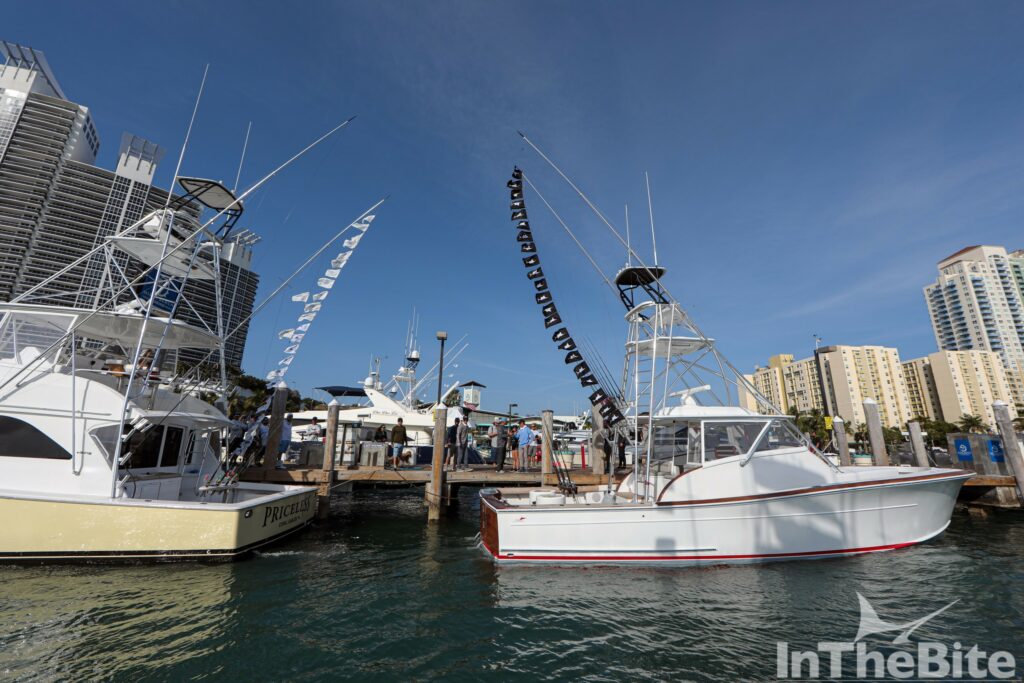
In south Florida, a new flag ritual has emerged that has some old salts crying foul. After lines out is called at a multi-day sailfish tournament, it has become ceremonial for the winning team, and only the winning team, to hoist their total tally of release flags. Many traditionalists claim that you should only fly flags for fish caught each day, but this innocent gesture is a simple celebration of an award-winning tournament campaign and in no way an act of stolen valor.
Best Practices for Flag Spacing and Presentation
There are also recommendations regarding the artful spacing of release flags. Always start with the starboard outrigger halyard first. A single flag should be placed halfway up the halyard. Two flags should be spaced evenly across the length of the halyard and raised two-thirds of the distance to the top. When youv’e had a banner day and the release flags are stacked grommet to grommet, let the overflow spill to the port ˜rigger. We feel that flags look best when they are separated by a minimum of six inches, but really there is no hard-set rule. Regardless of your allegiance to traditions, fishing flags keep the fun in the sport by initiating conversations on the dock and alerting potential charter clients that the fish are chewing. Regardless of how you choose to space or orient your flags, they must be crafted to withstand the harsh marine elements.
Choosing Durable Flags for Marine Conditions
Salt, sun and wind can tatter a vibrant flag in no time and choosing flags that are fabricated from durable synthetic material ensures they shed water fast and last for many seasons. Brass grommets resist the corrosive effects of saltwater and instead of spring-loaded flag clips most crew prefer copper wire as a fastening mechanism. Finally, store your flags in a moisture-free environment and the rest is up to you to make certain you don’t return to the dock flagless!

Don’t Forget to Check Out Our Sportfishing Job Board! Did You Know? It’s the perfect platform for seeking skilled captains and mates. Whether you’re on the hunt for your dream team or looking to join one, your next big adventure begins here. Explore the opportunities now! Click Here
Dive Deeper into the World of Sportfishing
Unlock Exclusive Savings: Enjoy 50% Off Your Subscription!
Are you ready to explore the thrilling world of sportfishing from the comfort of your home? Subscribe now and embark on a journey filled with captivating stories, expert insights, and insider tips. Choose between our digital or print edition and secure an incredible 50% discount on your subscription.
Subscribe today and get ready for an adventure like no other. Click here to subscribe and elevate your sportfishing experience with InTheBite Sportfishing Magazine.
Subscribe Today
____________________________
Get Both Print & Digital
Give a Gift Subscription
Manage Your Own Subscription
Save 50% Act Now
_____________________________