






 ITB Staff
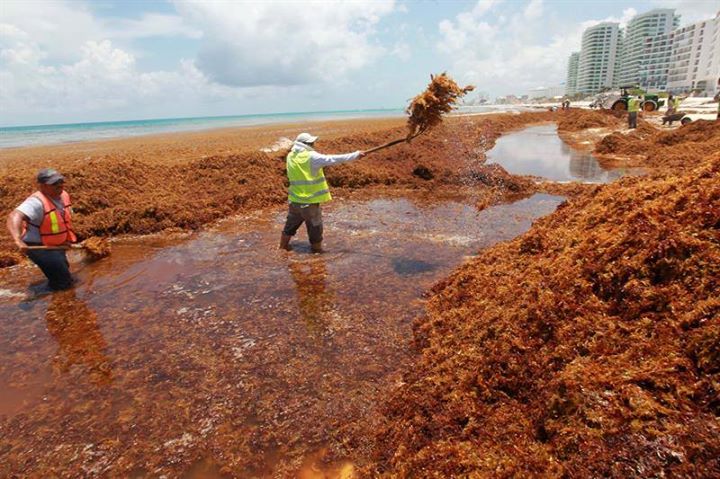
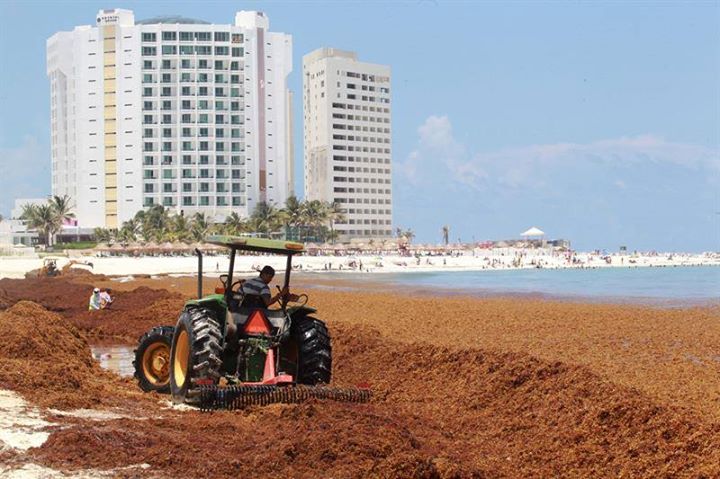
It’s become an recurring theme each year to hear about the best parts of the Caribbean and Gulf being overrun with weed. Not the puff puff give kind, but the pain in the butt kind. Sargassum. It can be everywhere. And not just in neat lines along the rips but in mats and globs and clumps as far as the eye can see. The National Oceanic and Atmospheric Administration reported that since 2011, large accumulations of Sargassum have become a remerging problem in the Caribbean Sea, Gulf of Mexico and tropical Atlantic.
[% oiopub-banner-23-center %]
NOAA’s July 20-26 experimental Sargassum Inundation Report showed high-risk areas for Sargassum around the Dominican Republic, Lesser Antilles and Cancun regions with numbers increasing along the Lousiana shoreline. At the beginning of July, scientists at the USF College of Marine Science estimated the brown macroalgae to be roughly the same size of the largest Sargassum bloom ever recorded in history back in 2018. Research predicted that Sargassum ending up in the Gulf will also continue, with the possibility of higher numbers in the Florida Keys and along the east coast of Florida.
 St. Thomas
A few years ago, Capt. Joe Figiel, who has fished the North Drop for more than 15 seasons, described a particularly bad Sargassum year in 2015. Figiel believed that a shift in currents could be bringing in more of the seaweed from wherever its point of origin might have been.
These same currents may attribute to why the bite has fallen off over the years and gotten better in other places, he pointed out. Some places have lost their success due to the lack of bait for larger predators. But not a season goes by down here [in St. Thomas] where we fail to see an ample food source and yet the marlin presence seems to be less.
Figiel saied the Sargassum has had also hindered their success in targeting whatever numbers of blue marlin may be on the Drop.
The Dominican Republic
Capt. Tim Richardson on the Tradition has set up his Caribbean operation in the Dominican Republic, fishing out of Casa de Campo and Cap Cana. When asked for a theory about why the Sargassum seems to have gotten worse, he says, I’m a big believer in the cycles of the currents in around the seven- to 10-year time periods. It seems that places can go hot and cold for these kind of time frames, like Madeira, and to a certain extent, Cairns. Whether you call it El Niño, La Niña or whatever, that up to others.
St. Thomas
A few years ago, Capt. Joe Figiel, who has fished the North Drop for more than 15 seasons, described a particularly bad Sargassum year in 2015. Figiel believed that a shift in currents could be bringing in more of the seaweed from wherever its point of origin might have been.
These same currents may attribute to why the bite has fallen off over the years and gotten better in other places, he pointed out. Some places have lost their success due to the lack of bait for larger predators. But not a season goes by down here [in St. Thomas] where we fail to see an ample food source and yet the marlin presence seems to be less.
Figiel saied the Sargassum has had also hindered their success in targeting whatever numbers of blue marlin may be on the Drop.
The Dominican Republic
Capt. Tim Richardson on the Tradition has set up his Caribbean operation in the Dominican Republic, fishing out of Casa de Campo and Cap Cana. When asked for a theory about why the Sargassum seems to have gotten worse, he says, I’m a big believer in the cycles of the currents in around the seven- to 10-year time periods. It seems that places can go hot and cold for these kind of time frames, like Madeira, and to a certain extent, Cairns. Whether you call it El Niño, La Niña or whatever, that up to others.
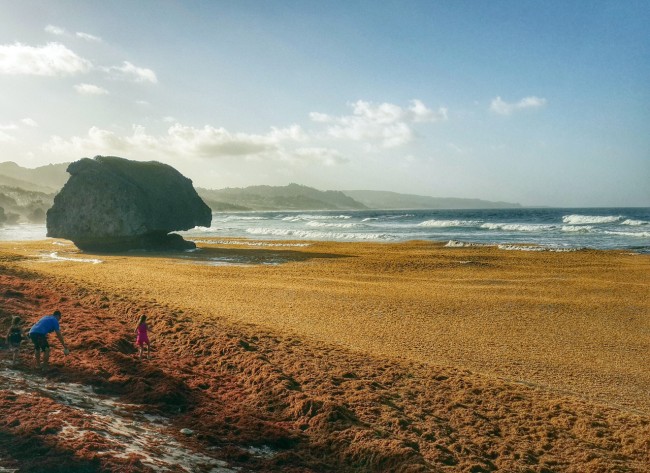
Seaweed off Barbados. This is Bathsheba on the east coast.
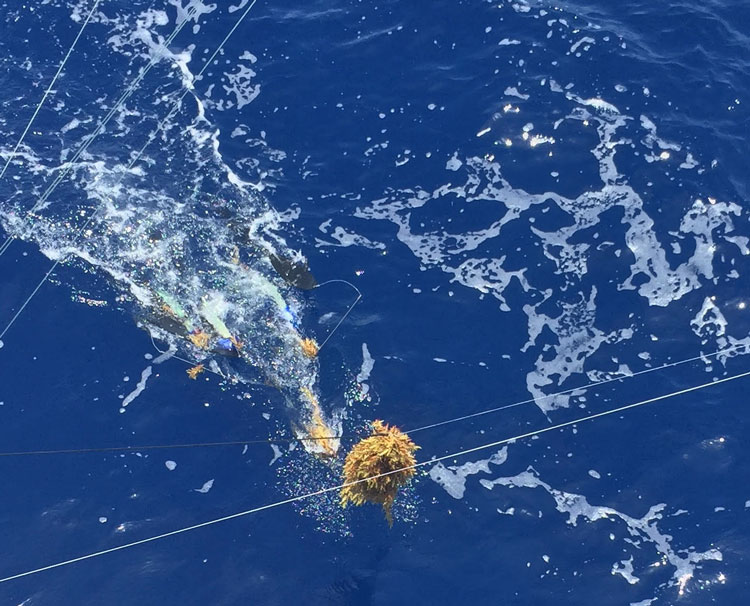
 Another issue is bait consumption. We charter fish every day so we use lures a lot on the long riggers. A lot of our guests want to hook their own fish but with the weed so bad, every time you get some on a ballyhoo it would ruin the bait, he pointed out. We were going through so many baits every few minutes, it was just crazy. The little lures were using still catch some weed but it not costing you $50 or more a day in ballyhoo that are wasted when big clumps of weed get on the circle hook or on the bill and tear it up.
The dredges obviously snag the most, Figiel said. However, at least in our opinion, grass on the front of the dredge doesn’t necessarily compromise the dredge’s ability to attract fish. You have to think that if the grass isn’t cleared from time to time though, retrieval of the dredge itself could prove difficult at the most critical of moments. It a lot of work for the mates but the bottom line is to keep the dredges as clear as possible.
So what next? Unfortunately, I can’t offer any suggestions as to if there is anything we can do about it, Figiel says. We all joke that hopefully one of the more heavily-populated countries would find it as a new favorable food source, or maybe we can develop it into an alternate source of energy. For now I think we’re just doomed to plow through it and hope for the best.
Another issue is bait consumption. We charter fish every day so we use lures a lot on the long riggers. A lot of our guests want to hook their own fish but with the weed so bad, every time you get some on a ballyhoo it would ruin the bait, he pointed out. We were going through so many baits every few minutes, it was just crazy. The little lures were using still catch some weed but it not costing you $50 or more a day in ballyhoo that are wasted when big clumps of weed get on the circle hook or on the bill and tear it up.
The dredges obviously snag the most, Figiel said. However, at least in our opinion, grass on the front of the dredge doesn’t necessarily compromise the dredge’s ability to attract fish. You have to think that if the grass isn’t cleared from time to time though, retrieval of the dredge itself could prove difficult at the most critical of moments. It a lot of work for the mates but the bottom line is to keep the dredges as clear as possible.
So what next? Unfortunately, I can’t offer any suggestions as to if there is anything we can do about it, Figiel says. We all joke that hopefully one of the more heavily-populated countries would find it as a new favorable food source, or maybe we can develop it into an alternate source of energy. For now I think we’re just doomed to plow through it and hope for the best.


