





When I head offshore for a day of fishing my wife, Cadence, almost always says, I hope you catch a big one today! Catching a big fish is probably every captain and angler goal on any given fishing trip. We obsess over gear, baits, weather, moon phase, lucky shirts and hats the list goes on. One thing that often gets overlooked, however, is the actual battle of man versus fish.
[% oiopub-banner-23-center %]
When it comes to your average charter customers or other inexperienced anglers that I take offshore, one common theme emerges: most have never realized how much work is involved in catching a large game fish. Fighting a fish in a stand-up harness from a center console has its own unique challenges”complete with advantages and disadvantages. Obviously, it would be preferred that everyone who straps into a stand-up harness has prior experience, but we all must start somewhere.
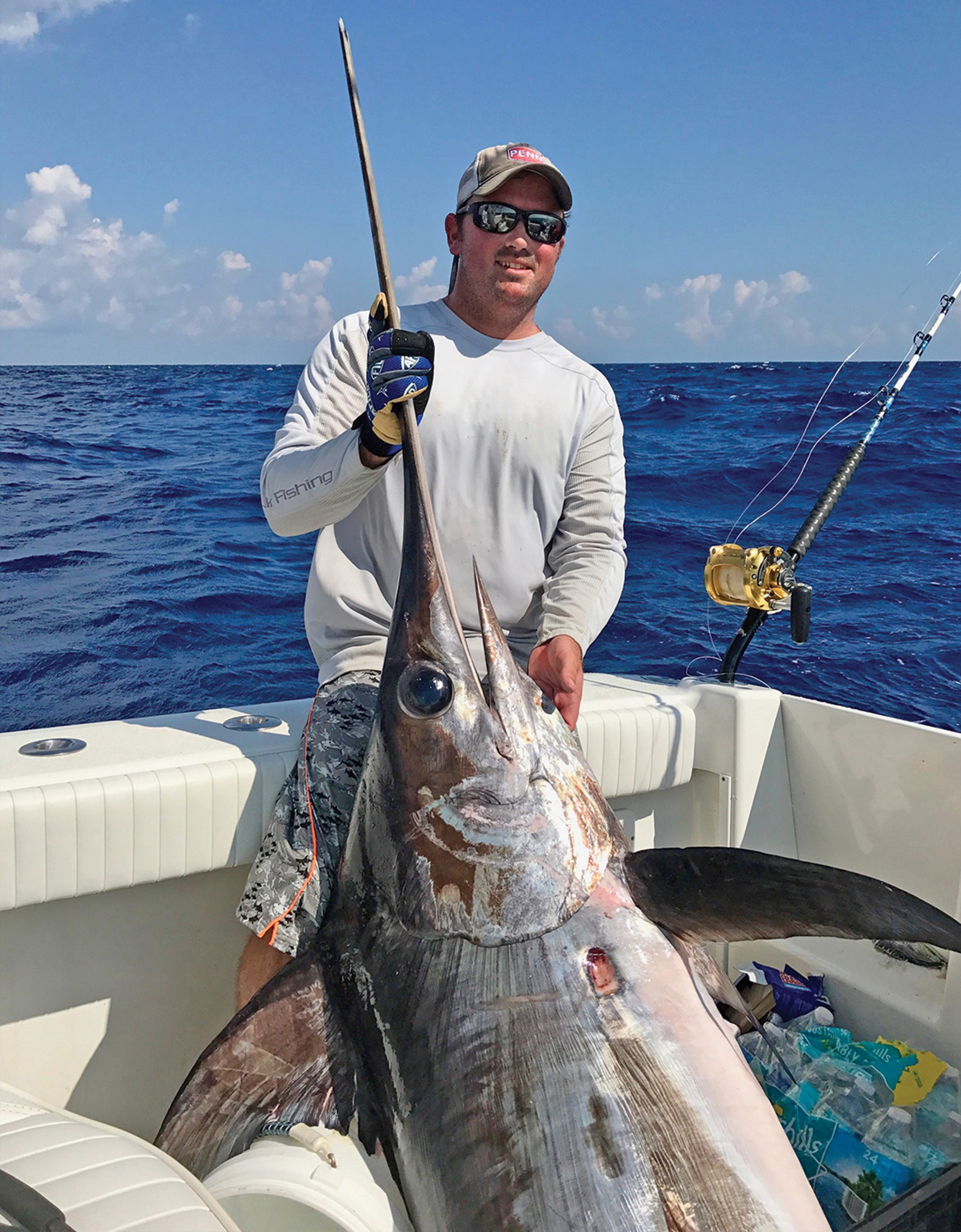
Over the years, I have had the pleasure of putting many rookies into the harness for their first battle with a swordfish, marlin or tuna. I always start the same way: by explaining the entire process, from hookup to endgame, to the angler. Ideally, this conversation takes place prior to fishing, as I believe this allows their brain to process the information and better prepare them for the ensuing battle. One point of emphasis is the physicality of fighting big game fish in a stand-up harness.
As my operation is based in Fort Walton/Destin, Florida many of my clients are on vacation. I make a point to stress the importance of staying well hydrated the day before the trip. I also ask them to please refrain from hitting the local watering holes too hard the night before. Preparing for what could be an hour plus battle in a standup harness is like getting ready for a 5k run. Showing up dehydrated and hungover is a sure-fire cause for the angler to end up tapping out, failing to finish the fight.
After we have thoroughly discussed the details of the fight, I like to get the angler fitted into the harness on the boat. Prior to fishing, I will strap the angler into a rod and put some pressure on the rig so they can feel what it will be like to have 20 or more pounds of drag pulling on them during the fight. This process will also help to identify any uncomfortable points on the harness that may need to be adjusted.
 This is also a great time to teach the technique involved with a stand-up harness. Five minutes of practice in the harness pays dividends for the angler when they have an angry fish on the other end of the line. Proper technique in the harness will keep the angler in better shape for longer fight times and could be the difference between the angler catching the fish or calling it quits beforehand.
Safety is critical when someone is strapped into a harness with a fish. Keeping a hook knife attached to the harness is a must. Also, someone on the boat is always tasked with spotter duty. The spotter will shadow the angler, provide water if needed, and in the event the angler loses their balance, they are there to make sure the person strapped in doesnt fall overboard.
Ensuring the angler understands how to easily unclip from the harness is another critical safety precaution. There are many stand-up harness options available. My personal preference is a harness without closed d-ring style lug clips which could become a safety issue with getting someone out of the harness. The angler should be able to unclip from the harness lugs quickly and easily.
This is also a great time to teach the technique involved with a stand-up harness. Five minutes of practice in the harness pays dividends for the angler when they have an angry fish on the other end of the line. Proper technique in the harness will keep the angler in better shape for longer fight times and could be the difference between the angler catching the fish or calling it quits beforehand.
Safety is critical when someone is strapped into a harness with a fish. Keeping a hook knife attached to the harness is a must. Also, someone on the boat is always tasked with spotter duty. The spotter will shadow the angler, provide water if needed, and in the event the angler loses their balance, they are there to make sure the person strapped in doesnt fall overboard.
Ensuring the angler understands how to easily unclip from the harness is another critical safety precaution. There are many stand-up harness options available. My personal preference is a harness without closed d-ring style lug clips which could become a safety issue with getting someone out of the harness. The angler should be able to unclip from the harness lugs quickly and easily.
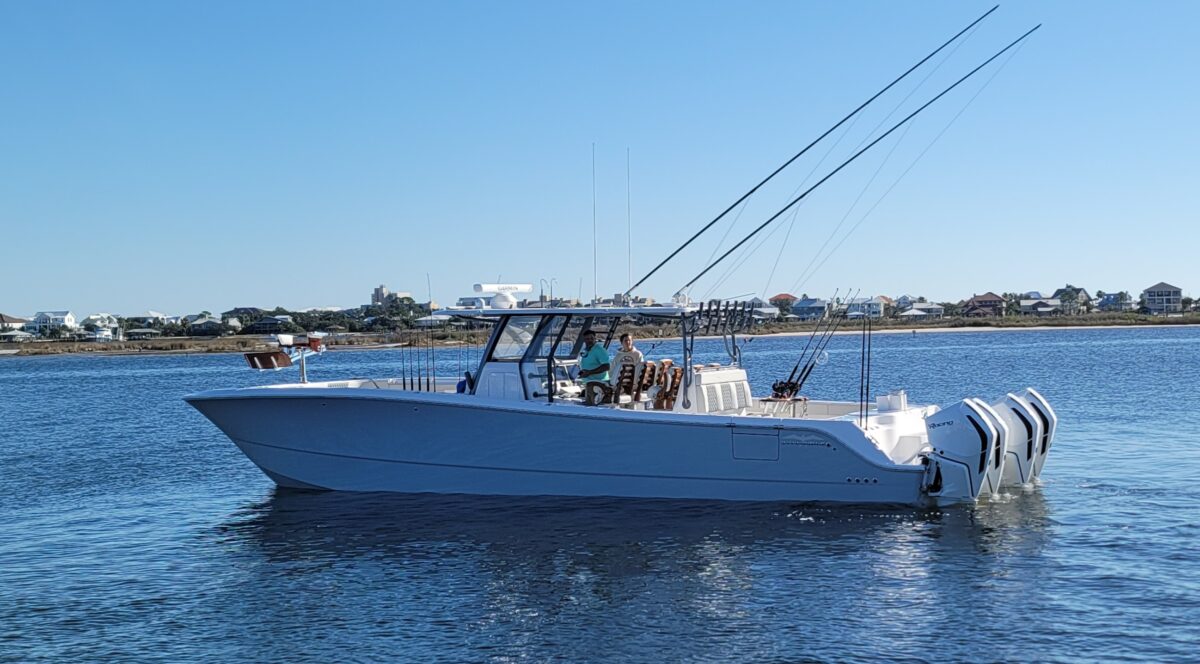
 Once we achieve a hookup, the strategy of fighting the fish from a center console will vary depending on the species. In most situations, I like to position my angler near the stern on either the port or starboard side.
My goal as the captain is to keep the line near a 45-degree angle away from the motors. From this position, I can easily motor forward in a slight turn to help the angler gain line or make a slight turn away from the fish to help the angler stay tight if needed. I typically fight fish on the port side of my boat, as it is the side nearest the helm and allows me a good line of sight on both the angler and fish.
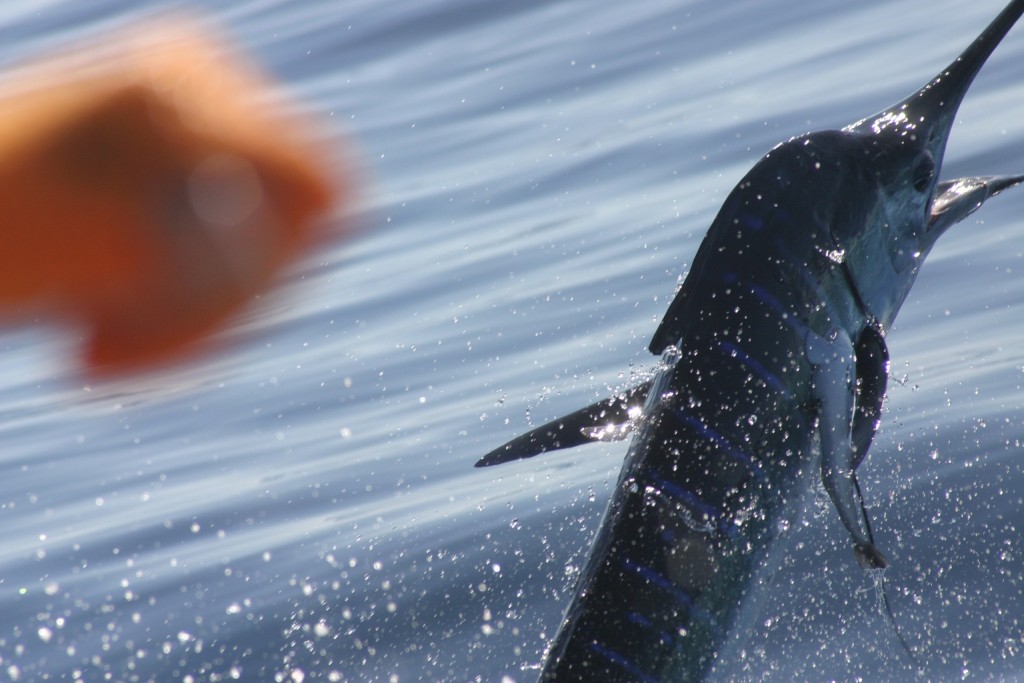
Fighting a marlin from a center console requires a lot of boat driving, and I will move the angler around often during the fight. A swordfish or tuna requires a little less boat driving, and I can generally keep the angler in the same position throughout the fight.
Fighting fish from a stand-up harness on a center console is an effective way to land virtually all big game species. When used with proper technique, a stand-up harness allows the angler the ability to stay in the fight for the long haul. As with all big game fishing tactics, practice and preparation are key to success.
Once we achieve a hookup, the strategy of fighting the fish from a center console will vary depending on the species. In most situations, I like to position my angler near the stern on either the port or starboard side.
My goal as the captain is to keep the line near a 45-degree angle away from the motors. From this position, I can easily motor forward in a slight turn to help the angler gain line or make a slight turn away from the fish to help the angler stay tight if needed. I typically fight fish on the port side of my boat, as it is the side nearest the helm and allows me a good line of sight on both the angler and fish.
Fighting a marlin from a center console requires a lot of boat driving, and I will move the angler around often during the fight. A swordfish or tuna requires a little less boat driving, and I can generally keep the angler in the same position throughout the fight.
Fighting fish from a stand-up harness on a center console is an effective way to land virtually all big game species. When used with proper technique, a stand-up harness allows the angler the ability to stay in the fight for the long haul. As with all big game fishing tactics, practice and preparation are key to success.