




Table of Contents
The Genesis of Winter Custom Yachts
The combination of a lifelong passion for boats, early training as a carpenter and a close-to-college location, albeit some 130 miles from the coast, is what launched the build of some of the best sportfishers on the market. This is how Tim Winter, president of Winter Custom Yachts, now based in Hubert, North Carolina, came to build Hull #1, the first of now 40 ‘Carolina-styled’ sportfishers, a milestone the company hit as Winter turns age 40.
Building Hull #1: A Community Effort
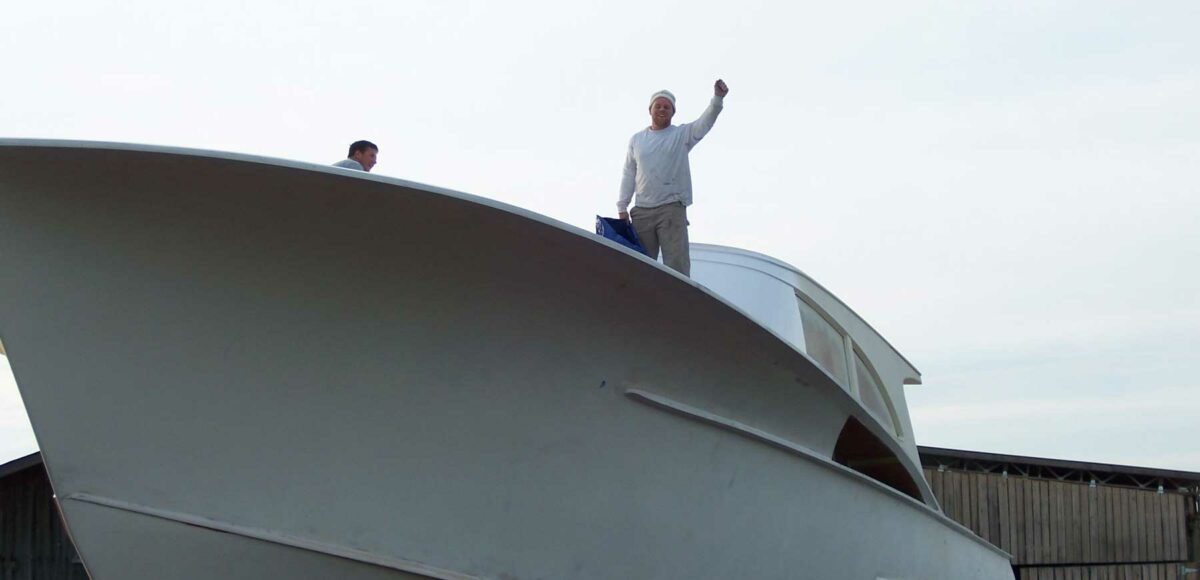
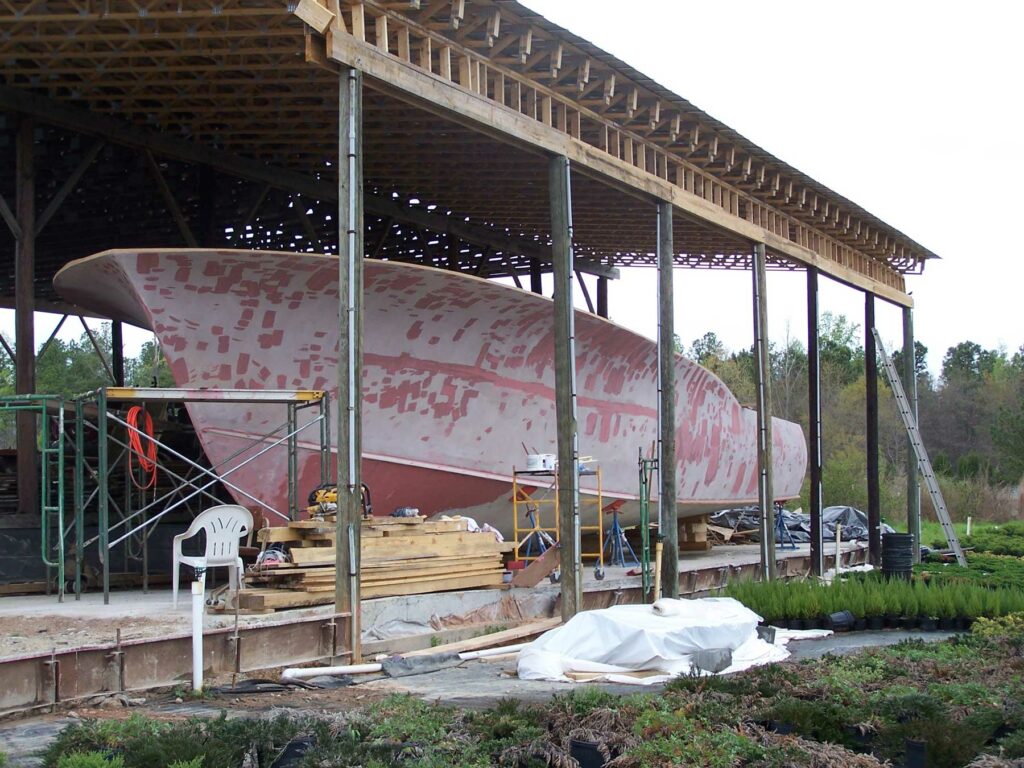
“Hull #1 was started for Will Copeland of Apex Nurseries in Apex, North Carolina,” Winter tells. “He had run a charter boat business out of Atlantic Beach for many years and had the dream of building his own sportfish. With the help of Billy Baum of Manteo, the first boat was born in a pole barn in the nursery. Through mutual friends, I heard about this boat dream when I traveled to Raleigh to attend North Carolina State University. After several conversations, we joined forces to build the boat.”
This first hull was constructed on a CNC (computer numerical control) cut jig, the structural members were laminated Douglas fir and it was cold-molded with three layers of Okoume plywood. She’s 62’ LOA. Determining what engines to power her with was one of the biggest decisions of the build.
“We chose the Caterpillar C32 1550HP engines that we financed with the most skeptical banker in Raleigh. I’m sure they thought they’d never see their money again,” says Winter.
The building turned into a community affair. Everyone in Apex knew of the boat being built in the middle of the nursery. It was common to have neighbors visit the barn to check on the progress and lend a hand whenever there was a need. In the end, the boat took just a little over two years to complete, which equaled the time it took for Winter to complete his degree in mechanical engineering. After graduation, Winter launched Hull #1 at Jarrett Bay Boatworks in Beaufort in front of family and friends.
Challenges and Triumphs of the First Build
“The first sea trial was as eventful as the entire build,” he says. “We ran out of fuel as soon as we left the dock because the pickups were plumbed into the returns, the steering was backward and a shaft seal was leaking. It all went wrong, but we were over the moon just to be floating and running our creation. Eventually, after correcting all our issues, we were able to stretch her legs that late spring afternoon and get her up to 43 knots, and cruise throughout the Morehead City waterfront. It was surreal being there that day, but it had to end so we could put her back in the shed and fit the hardtop and get ready for the June delivery,” says Winter.

It was decided, about halfway through the build, that the best course of action for the project would be to put the boat up for sale and see who would be interested. After many long months of working and waiting, Earl Wells of Clinton, North Carolina, walked up on a Sunday and made an offer that was eventually accepted. From that point, the newly christened Galot (Get A Load of This) was finished in preparation for Well’s team to fish The Big Rock Blue Marlin Tournament in Morehead City that year.
Continuing the Legacy: Hull #1 Through the Years
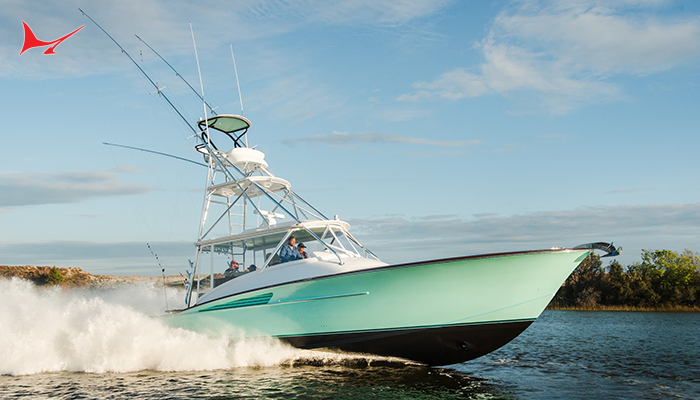
Since fishing as Galot, Hull #1 has changed hands several times. Her second and fifth owner was Harry Smith, who named her Double B. Neal Klar was her third owner, and Terrell Rhye, with Grander, was her fourth. Today she’s the Double R and docks out of Beaufort and Fort Lauderdale. This boat was originally designed to be an East Coast tournament boat to travel, and that’s what she’s done. Hull #1’s accomplishments over her life include catching several fish over 500-pounds and earning top leader board positions in The Big Rock, Hatteras Village Offshore Open, Pirate’s Cove Billfish and Ducks Unlimited tournaments.
“We have had the opportunity to service and upfit this boat throughout the years. We have repainted her twice, added Seakeepers, and done extensive interior and exterior work. The boat today is better equipped than ever and we are excited to see where her new owners take her this upcoming year,” says Winter.
From Drawing to Drawing Board: Tim Winter’s Journey in Boat Building
Winter, who was born and raised in Eastern North Carolina, dreamed of being a boat builder since he was a kid. In fact, there wasn’t an age that he didn’t fill his time drawing boats and thinking of ways to make them better.
“I learned to draw by studying the local boat builder’s brochures with line drawings inside and copying their details to understand what made each boat unique to the builder. I memorized every Carolina boat that I had heard of and knew all their specific details. I was completely obsessed with all things boating and knew that was all I wanted to do. Over the course of drawing these boats, I began to develop my own eyefor what I liked and what I foresaw my boats looking like one day. I have always loved curves and how they sat on the boat. I have always looked to build a sleeker, softer looking exterior with a higher focus on the carpentry and fit and finish,” he says.
Winter didn’t come from a typical “charter boat” family with lots of fishing experience. He grew up in his father’s cabinet shop, building cabinets and countertops. He was fortunate to learn the skills and become a solid carpenter before he transitioned into boat building. His first job outside the family business was at Shearline Boatworks in Morehead City. He worked on many smaller “Carolina-styled” sportfishing boats and received the liberty to thrive within the company. From there, he worked for Jim Luxton of C&L Boatworks building several boats with him before eventually moving to Raleigh to become a mechanical engineer. Not having the family heritage of boatbuilding was his driving force to earn his engineering degree.
Hull #1 And Counting
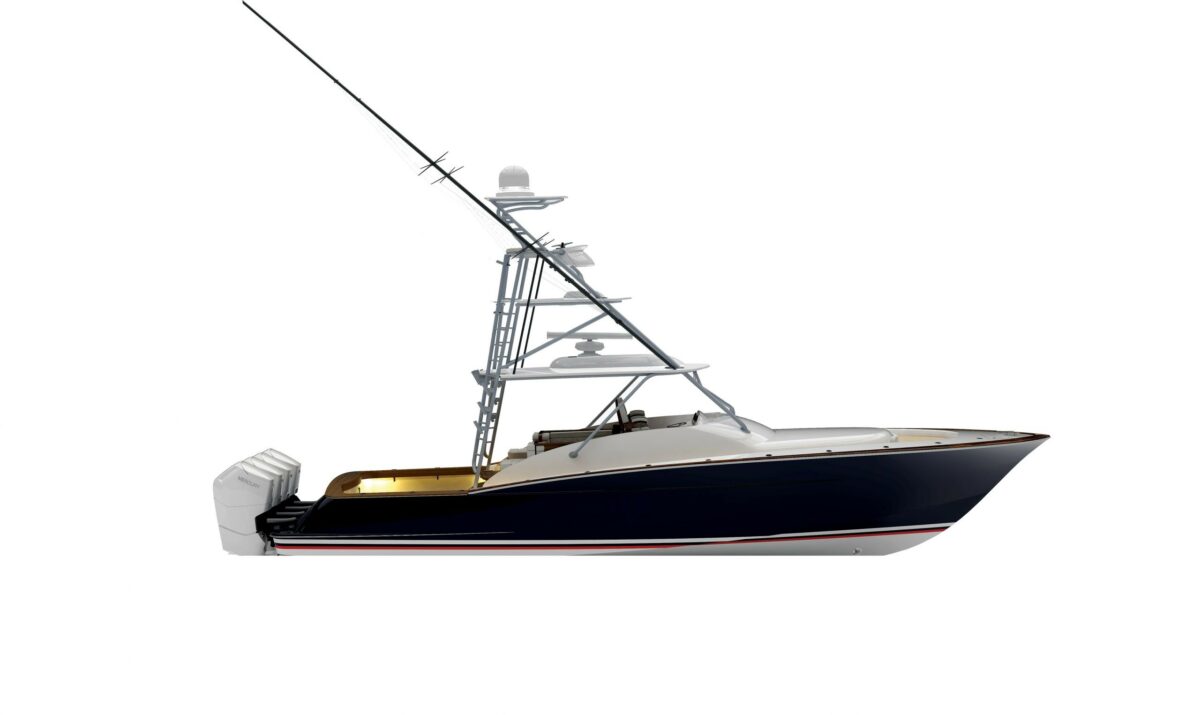
Next up, Winter Custom Yachts has Hull #31, a 43’ stepped hull center console, Hull #36, a 66’ Sport Coupe, Hull #37, a 46’ Walk Around, and Hull #38, a 66’ Convertible under construction. In March, the company starts its largest boat to date, an 80’ Convertible.
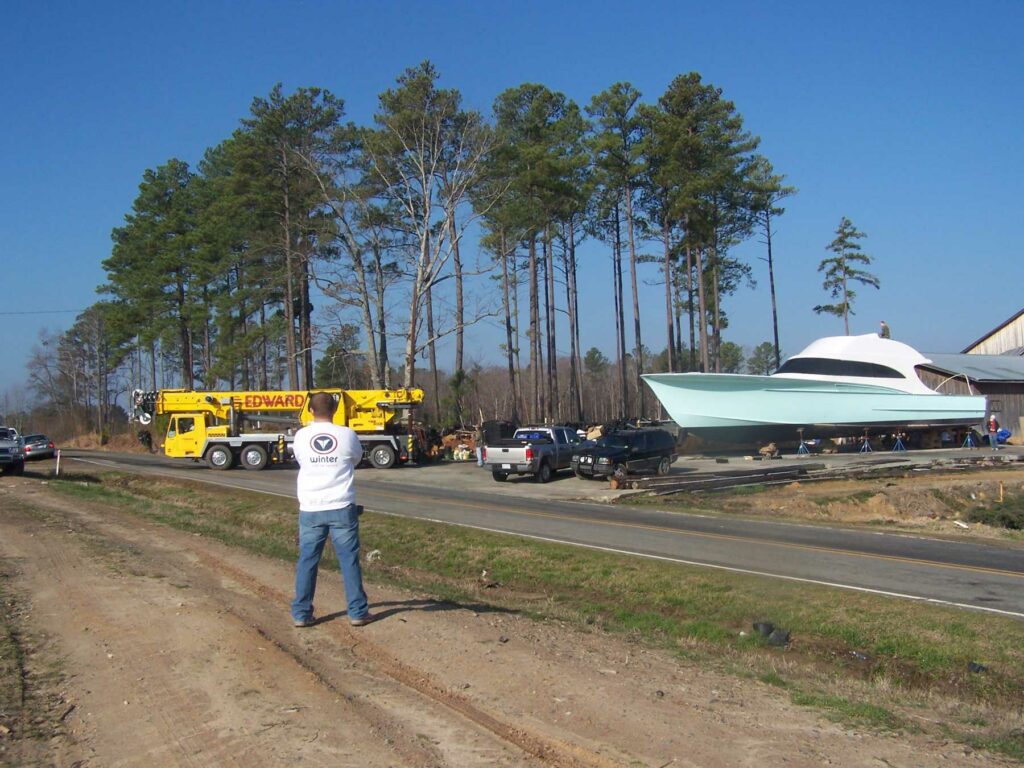
“The boats today have come so far since Hull #1. However, you will see subtle design characteristics on the new boats that you can also see in that first hull,” says Winters. “I have changed a lot over the years and so has my eye for boats. There was a time when I thought I needed the excessive flair and tumblehome in the transom, but today I have moved away from both. The exaggerated curves don’t appeal to me as they did, and I like a sleeker fast-looking hull today with a gentle shape. I have also been pushed to fit more interior in the boats, and that has made the bows much fuller than what was on Hull #1. The bottoms have also changed tremendously as we chase speed and efficiency in all we do.”
Looking ahead, Winter says his goal is to build exquisite custom boats with flawless lines that perform like no other. Looking behind, he says Hull #1 will always be special because it showed him that he could build a high-quality sportfisher.
Photos: Winter Custom Yachts
Don’t Forget to Check Out Our Sportfishing Job Board! Did You Know? It’s the perfect platform for seeking skilled captains and mates. Whether you’re on the hunt for your dream team or looking to join one, your next big adventure begins here. Explore the opportunities now! Click Here
Dive Deeper into the World of Sportfishing
Unlock Exclusive Savings: Enjoy 50% Off Your Subscription!
Are you ready to explore the thrilling world of sportfishing from the comfort of your home? Subscribe now and embark on a journey filled with captivating stories, expert insights, and insider tips. Choose between our digital or print edition and secure an incredible 50% discount on your subscription.
Subscribe today and get ready for an adventure like no other. Click here to subscribe and elevate your sportfishing experience with InTheBite Sportfishing Magazine.
Subscribe Today
____________________________
Get Both Print & Digital
Give a Gift Subscription
Manage Your Own Subscription
Save 50% Act Now
_____________________________