



Table of Contents
Garrett Lee: A Young Fisherman Turned Innovator
Garrett Lee, the owner and brainchild behind Tsutomu Lures, started fishing as a young kid off the coast of Honolulu. His father, Bill Lee, and uncle, Mike Lee, both long-time and highly experienced captains, schooled him right from the start. Over the years, the two senior relatives never missed a chance to fish in the Ahi Fever Fishing Tournament, hosted by the Waianae Boat & Fishing Club on the western shores of Oahu. Yet, the duo never won.
It’s not surprising. After all, this was once one of the largest fishing tournaments in Hawaii, and over 200 vessels participated. The sheer size, not to mention angling talent, is what made it even more special when, in the tournament’s 2010 edition, Garrett won with a 221-pound ahi (yellowfin tuna) he caught off the 30-foot Force Marine, Lexi Ann. What’s more, Garrett’s nine-inch Moke Bullet, fashioned from a head his uncle made for his personal use years before, enticed the whopper ahi to bite.
“We got a pretty good buzz going for our lures with that win,” he says. “We were in maybe one or two tackle stores, but that tournament kicked us into the whole Hawaiian fishing scene.”

Back-to-Back Success at Ahi Fever
That’s not the end of the story. Four years later, Garrett was back again, angling in the Ahi Fever Tournament. He got skunked the first day.
“My cousin Brandon, my Uncle Mike’s son, is my fishing partner,” Lee said. “That second day, both of our fathers came out with us, even though they weren’t fishing much by then.”
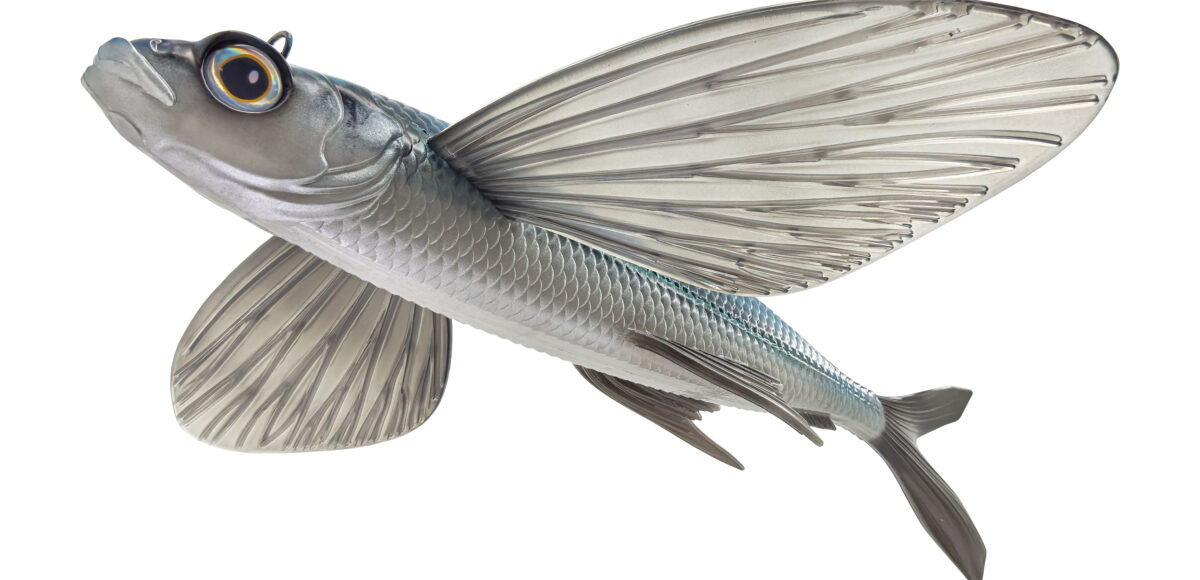
No sooner had roles reversed, with the senior gentlemen now as crew, than Garrett caught the second largest ahi of the tournament, at 224 pounds, just four pounds shy of the winner, on his 24-foot Skipjack, Ann’s Revenge. Again, it was the nine-inch Moke Bullet on the hook. It’s the first lure Garrett ever made that he still handcrafts today. The Moke works its magic by running just below the surface, then coming up to skitter along the top like a fleeing flying fish.
The Evolution of Tsutomu Lures
Lee grew up diving in the shallows off Oahu to catch octopus and small reef fish, his father’s favorite Sunday pastime. A few years later, his father and uncle started big-game fishing, something many island men did as a side job. Running a commercial boat came easy for the two men, who worked as aviation and auto mechanics, respectively. They would share their catch with family and friends and sell the rest at the local fish auction.
“I grew up on fishing boats,” says Lee. “There was a show every Sunday called ‘Let’s Go Fishing‘ hosted by Harry Kojima. I was in elementary school then, but I knew that was the job I wanted when I grew up. As I got older, like many kids here, I got into surfing, and fishing took a back seat.”
Lee chased the surfing dream for several years and became familiar with resin while fixing his own boards and working in surfboard factories. Gradually, when the swell wasn’t pumping, he and his friends started spearfishing. Soon, and since his father was still fishing every Monday, rain or shine like clockwork, Garrett returned to the cockpit.
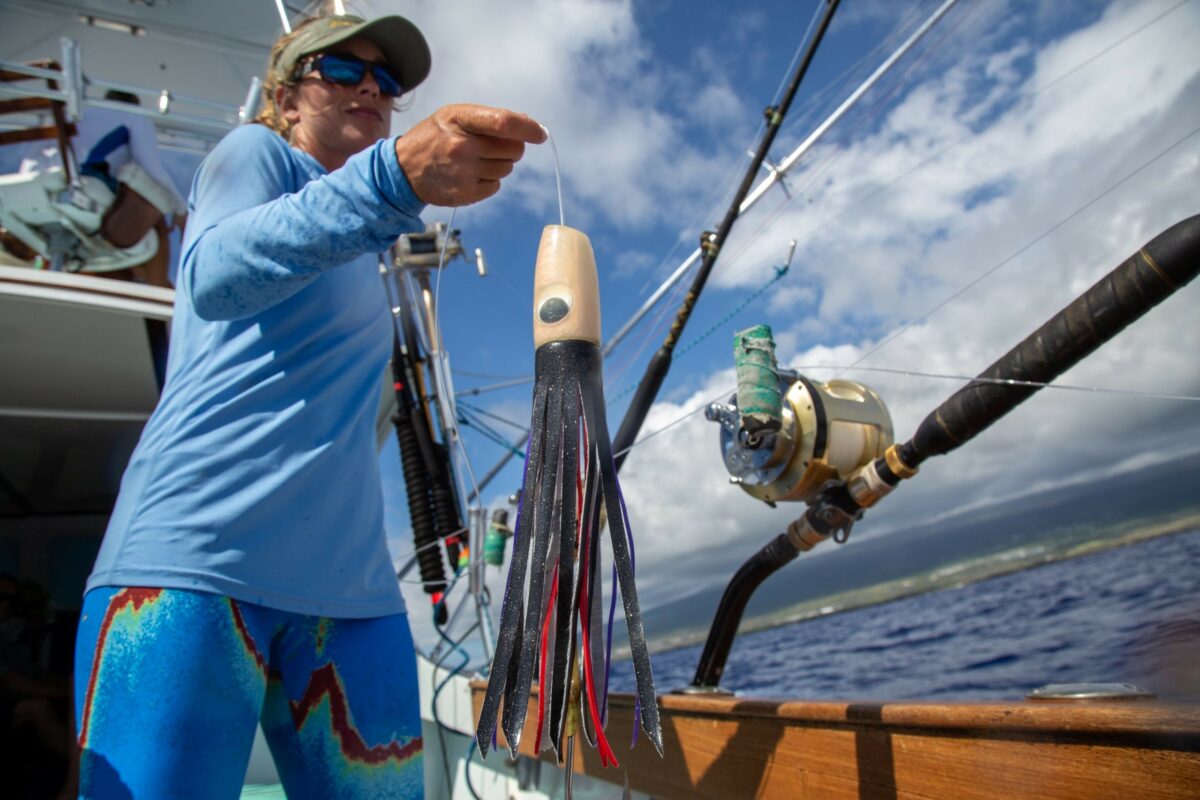
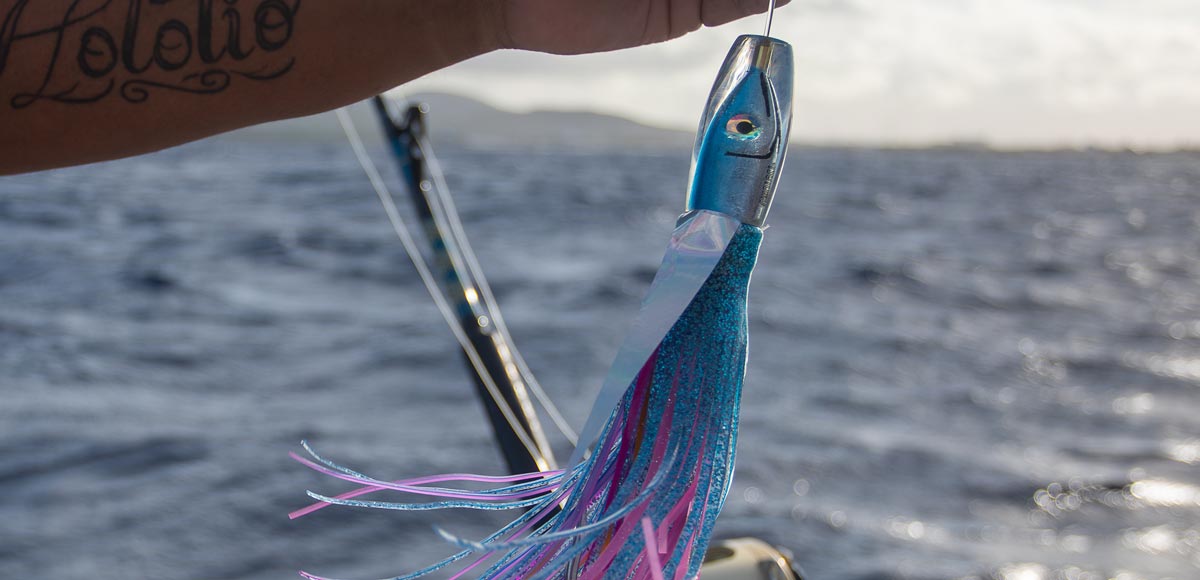
“I’d go to the tackle store and buy fishing lures,” Lee said. “Hawaii is unique because most guys don’t buy the lure with skirts. They buy the lure head, pick out the skirts, and tie it up themselves as a project. I was doing that a lot. Then my dad says, ‘Why are you wasting all your money buying these heads? Why not ask Uncle Mike to show you how to make them?’ That’s how I got into making trolling lures.
Garrett’s Uncle Mike wasn’t about to give all his secrets away, but he did get his nephew started.


A Blend of Artistry and Functionality
“What most guys do when starting is to take somebody else’s head and mold it,” Lee said. “That’s frowned upon, but it’s how you start. Luckily, the heads I was molding were from those my uncle made in the 1980s. I already knew that the shapes would work if I did them right.”
Lee molded heads on his own for four or five years, then local lure maker Gary Yamamoto of Magic Lure Enterprises took the young man under his wing. Garrett says Yamamoto influenced everything from the lure-making machinery to the shapes, an education he used to take his business to the next level. That included moving away from old-school classic heavy weather lures and instead fashioning lures like the nine-inch Mokes, which are proven to catch big yellowfin tuna.
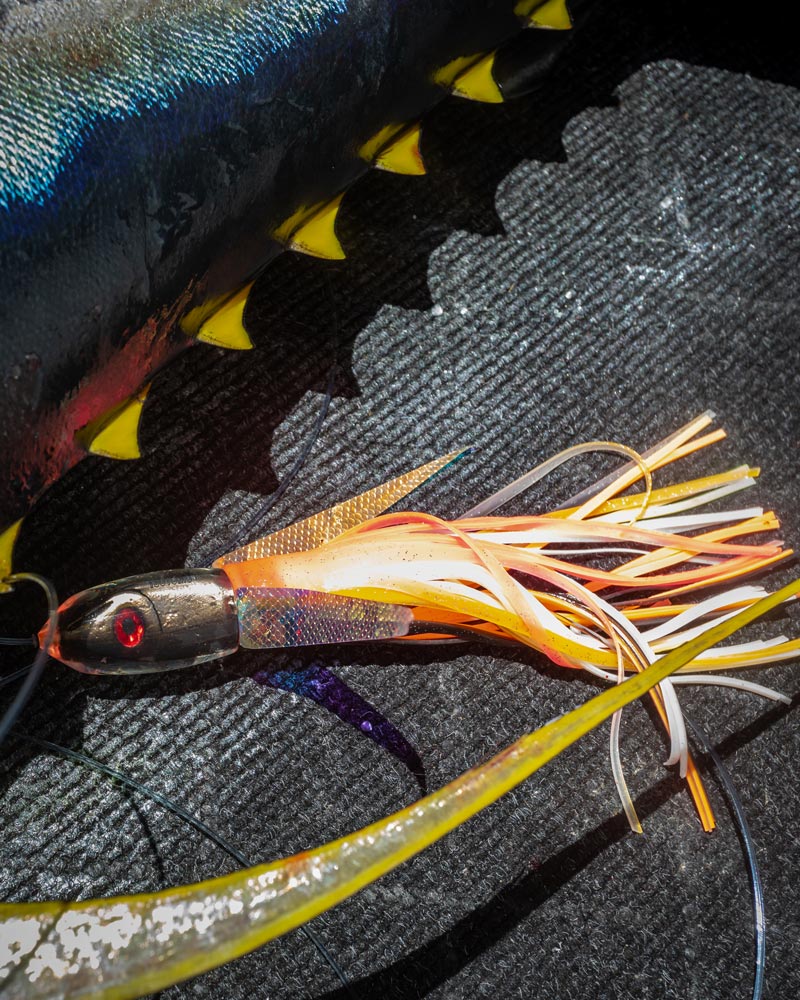
“Our lures are different because they have a fish insert,” Lee said. “With this style, we’re confined to the shape of the insert. If you don’t follow the insert shape correctly, it doesn’t give the right illusion. If you take the fish insert shape of our lure and look at it compared to the same lure made in a traditional Hawaiian way where the top is tinted, and maybe there is a shell inside, it will look like two different lures. When you’re looking at our lures, you’re looking at the shape of the fish, but when you’re looking at a traditional poured lure with tints, you’re looking at the outline of the lure.”

Word of Mouth: The Rise of Tsutomu Lures
Lee is indeed artistically inclined. He started his lure-making business in the closet of a recording studio he owned, where he bought and sold recording equipment on eBay.
“I got so addicted to making lures that I had to start giving them away to my friends,” he said. “But there was still a surplus. So, I started selling them on eBay. We’re one of the first lure companies to have a social media presence. I’d post a picture of the lure, the fish I caught with it, and the price. Back in those days, especially in Hawaii, nobody was doing that. Most of the fishermen were like my uncle. You don’t get to see the lures. They’d put them away before they arrived back at the marina. Here I was showing the world. That’s how I slowly built the business. Completely bootstrapped.”
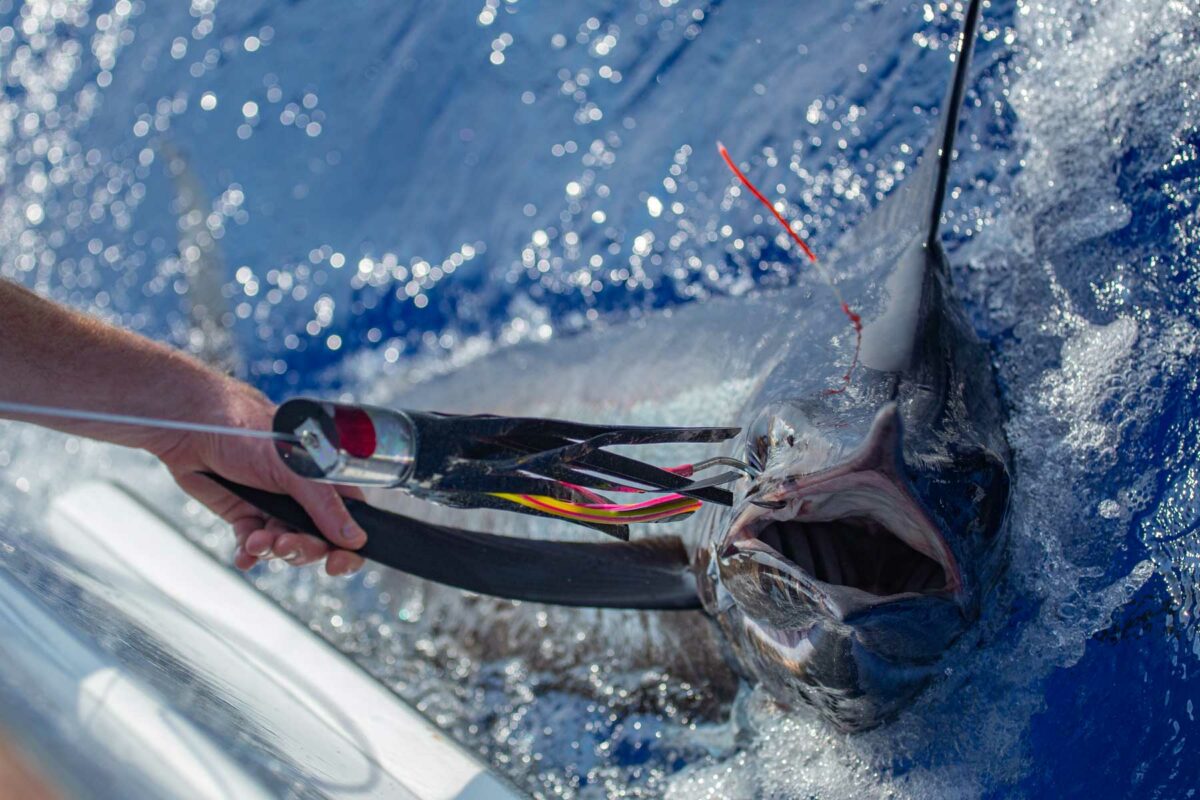
Garrett has evolved his Tsutomu Lures line, including stingers for marlin fishing. His uncle was an avid marlin fisherman, so luckily, he had the base shapes for these, too.
“A big push we’ve had lately is returning to classic type lures,” Lee said. “The manufacturing process of making fish insert lures has become more efficient, and we can make a lot of them, even though it’s time-consuming. Now that we have that down, we’re reversing and working with classic-type lures. It’s all about taking a classic lure, adding to it, and creating something different, whether it be a different color, color pattern, or insert. Not the old boring classic stuff.”

Dive Deeper into the World of Sportfishing
You’ve just experienced a taste of the exceptional content featured in the pages of InTheBite Sportfishing Magazine. If you found this engaging, you’re in for a treat with our full publication. Whether you prefer the tactile experience of print or the convenience of digital, we have the publication for you.
Visit our subscription page now to join the InTheBite family and elevate your sportfishing experience with every issue.