




Table of Contents
Historical Perspective on Freshwater Challenges
Over 200 years ago, Samuel Taylor Coleridge wrote in his poem The Rime of the Ancient Mariner, “Water, water everywhere, nor any drop to drink.” This holds true today, as we still venture out on the ocean with no easy way to make drinking water. An offshore boat trip preparation checklist often includes bait, fishing gear, food, fuel, and water. Whether a short, day trip or an extended offshore adventure, having fresh drinking water onboard is a necessity, and not having to pay $.40 per gallon in the Bahamas is a feel-good factor as well. So let’s take a look at a guide to boat watermakers.
The Necessity of Freshwater Onboard
Boaters fill their water tanks before they leave the marina, baan run dry faster than you expect.
Understanding Desalination Methods
With so much seawater around, how can we convert it to fresh water we can drink? We can desalinate it! Desalination removes salts and minerals from salt water, with distillation and reverse osmosis the most common processes. On land, there are over 20,000 desalination plants worldwide made up of both distillation and reverse osmosis.
Distilling water is the oldest and most common method used to remove salt from water. In simple terms, distillation involves heating and evaporating the water, and then condensing the steam back into a liquid. The salt will stay behind when the water boils and the clean fresh water is collected in a separate container. Distillation is energy intensive since the seawater needs to be heated and subsequently cooled to produce desalinated water. This system is not practical for pleasure boats. As an example, the US Navy ship, U.S.S. Carl Vinson can produce 400,000 gallons of fresh water per day by distillation and often uses these capabilities in humanitarian missions to areas after a disaster.

Reverse Osmosis: The Preferred Method for Boats
Reverse osmosis (RO) pressurizes salt water. and forces it through a semipermeable membrane, straining out mineral substances at the molecular level. Developed in the 1960s, the process became feasible on a commercial scale in the 1970s. It ultimately replaced distillation as the method used in most new desalination facilities, in part because it requires less energy. Besides removing salt, both desalination methods remove every mineral and most biological and organic chemical compounds, producing water that is safe to drink, far exceeding federal and state drinking water standards. The world’s largest reverse osmosis plant in the middle east can produce 158 million gallons of water per day.
Pleasure boats use reverse osmosis (RO) equipment. An RO system, or “water maker,” consists of a booster pump to supply water to the high-pressure pump. The high-pressure pump then pressurizes the seawater to 600-1,000 psi and forces the water through the specialized RO membrane. The RO membrane is like a filter, only allowing water molecules to pass through, leaving behind a brine mixture of salt and minerals. About 90 percent of the water pumped through an RO system is discharged back to the sea as brine and the remaining 10 percent becomes clean, pure fresh water.
Sound simple? The process is basic, but the equipment can be complex. Pleasure boat systems come in many styles and capacities, often rated by the daily water-making throughput capacity, meaning how much water can be made when running the system for a 24-hour period. If you have ever been on a boat with a water maker, you know when it is running because it’s often loud and vibrates, like a generator. The large, high-pressure pump consumes the most energy and makes the most noise. These pumps are like a large commercial power washer pump and require a lot of electricity. Some RO water makers incorporate an engine-driven high-pressure pump, but most systems use an electric motor pump. These typically require 240 volts of AC power, though some small systems run using DC power.
Maintaining Your Watermaker
A RO water maker requires routine maintenance. The RO membrane is sensitive and expensive and works best when used daily, since daily operation inhibits biological growth within the membrane. It is best to flush the system with non-chlorinated freshwater (not city water) after each use, as chlorine will damage the membrane. If the water maker is sitting unused for a week or longer, it should be “pickled” with a biocide to keep bacteria from growing in the membrane.
Water makers have pre-filters that clean the water before it gets to the RO membrane, and most systems contain at least two pre-filters, but sometimes more, depending on the environment. At a minimum, most units use a 30-micron pre-filter, then a five-micron pre-filter to capture the silt and organic matter. If operating in oily waters, special oil removing pre-filters are important since oil will damage the RO membrane. Prefilters need to be cleaned and replaced on a regular basis, lasting about 6 months, depending on usage. Watermakers have gauges or an indicator that can measure the prefilter performance and will warn you when the filters need changing. Most watermakers need about 30 PSI of seawater pressure to feed the high-pressure pump – otherwise the high-pressure pump cannot do its job. Some boats find that running at high speeds, in rough water or backing down can create a loss of water pressure to the high-pressure pump, which will cause the watermaker to shut down automatically. If this happens frequently, you should investigate the watermaker seawater pickup type and location and improve its design if needed.
Parts-Per-Million
Watermakers have an automated system to monitor the quality of the freshwater (product water) output, only allowing high quality water to enter your tanks, while low quality water is discharged back to the sea. Most units measure the TDS, or Total Dissolved Solids in mg/liter, otherwise known as parts per million (ppm). Typical marine watermakers come pre-programed to allow product water to flow to the on-board tanks when below 500 TDS, which matches US EPA standards. As a reference, seawater can measure 40,000 TDS and brackish water about 10,000 TDS.
Some organic and inorganic solids can contribute to a total TDS or PPM measurement and for a thorough understanding of water quality, a laboratory analysis would need to be performed. When dealing with ocean water on the high seas, the predominant solids are salts and non-toxic solids. When it comes to washing the boats exterior and sinks/showers etc., the lowest PPM water is a benefit since it will reduce the hard water spots that can form when water dries on a surface.
Membranes
When it comes to the membranes, it should be noted that an RO membrane element is not a filter, which means it is not a disposable device expected to foul up or wear out due to its use. While it is true the RO membranes can last for three or more years, only careful system monitoring and measurements can prolong the useful life of the membranes. If the prefiltering system is not effective, fouling can occur on the membranes, but can often be cleaned using a specific cleaning chemical and or process to restore the membrane’s effectiveness. When the fouling becomes too severe, higher pressure is required to obtain the same amount of product water. In severe cases, no amount of high pressure will result in acceptable product water output. There are cases where the membranes have operated for more than 10 years, though three-to-five years is more likely to be an acceptable lifespan, especially since many captains prefer the lowest PPM freshwater output often found with new membranes.
Most systems automatically flush the membranes on a regular interval to keep fouling to a minimum. The watermaker is connected to the boat’s freshwater system and a valve automatically opens to flush contaminants from the membranes to the overboard discharge. It is important not to use city (dock) water that contains chlorine (most do), since the chlorine can damage the watermaker membranes. Once you begin using watermaker water, it is best to continue to use watermaker water and not re-fill with plain city water. If that is not practical, there are some activated carbon filters that can help reduce city water chlorine levels and a freshwater RO system can be used to purify city water before adding it to the boat’s tanks.
Capacity
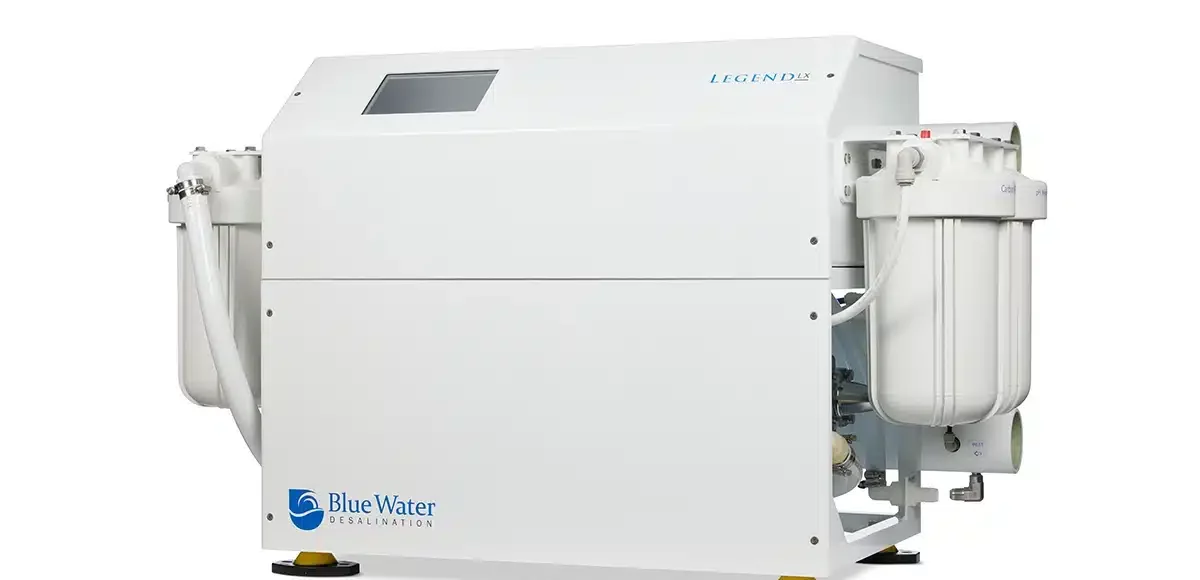
Watermakers are sized and rated by output capacity, typically by the number of gallons of freshwater that can be produced per 24-hour day. Capacities for sportfish watermakers range from 300-2000 gallons per day (GPD). Surprisingly, as you increase capacity, the price does not go up linearly, since the water makers all contain similar components, just enlarged for additional capacity. For example, a popular Blue Water Desalination watermaker capacity upgrade from 475 GPD to 1800 GPD (279%) output increase results in only a 26% increase in purchase cost. Keep a few factors in mind when sizing a new watermaker.
Components – the larger capacity water maker will have larger, and/or a high number of membranes, which need to be mounted and plumbed where you have access to maintain them, preferably accessing both ends of the membrane housings. The plumbing, including the thru-hull intake hose is larger for the higher capacity units.
Power – a higher capacity water maker will have a more powerful electric motor; you will need to be sure your generator has the capacity to run the watermaker.
Run time – a higher capacity water maker will run less hours to produce a given amount of water, and some captains do not like to run the watermaker while fishing due to unwanted noise and vibration that could affect fishing. They prefer to make water while running out or returning from the fishing grounds. A smaller, less expensive water maker may fit your boat and budget better, though be sure the machine will meet your water production needs during your time away from the dock.
Microorganisms
For some, there is more to quality drinking water than just a low TDS, so some systems include an ultraviolet light (UV) processing system to help neutralize any bacteria that is in the processed water through sterilization. This UV treatment hardware is installed after the watermaker product output and before the potable water tank and serves to sterilize the water by neutralizing any microorganisms in the processed water. If you are wondering about the source of microorganisms in seawater, they are often a result of human waste.
Escherichia coli, commonly called E. coli, is one of the most common species of fecal coliform bacteria found in sea water. While not prevalent on the high seas, boats that discharge untreated sewage in confined bodies of seawater, such as marinas, anchorages and small bays, can result in concentration of microorganisms which are too small to be removed during a typical reverse osmosis desalination system.
As an example, FCI offers Ultra-Violet Sterilizers that are installed inline to remove bacteria and micro-organisms. FCI stainless steel units provide 99.8 percent sterilization of bacteria and micro-organisms in water. These systems are available in a variety of flow rates to match the flow rate of the RO system.
Minerals
RO water effectively removes almost all the impurities and naturally occurring minerals in your drinking water, especially when a saltwater RO system is paired with a freshwater RO system. A combined saltwater/freshwater RO system can result in purified water as low as 10 PPM! A properly operating RO System delivers pure filtered water comprising only water molecules, but it also removes beneficial materials like salts and minerals. The absence of the necessary microelements in RO water does not mean we should stop drinking it. If you eat a balanced diet and drink sufficient electrolytes after exercise, you will not have a problem. However, if you cannot supplement these micronutrients through a balanced diet and consumption of electrolytes, you may consider a system to re-mineralize your RO drinking water.
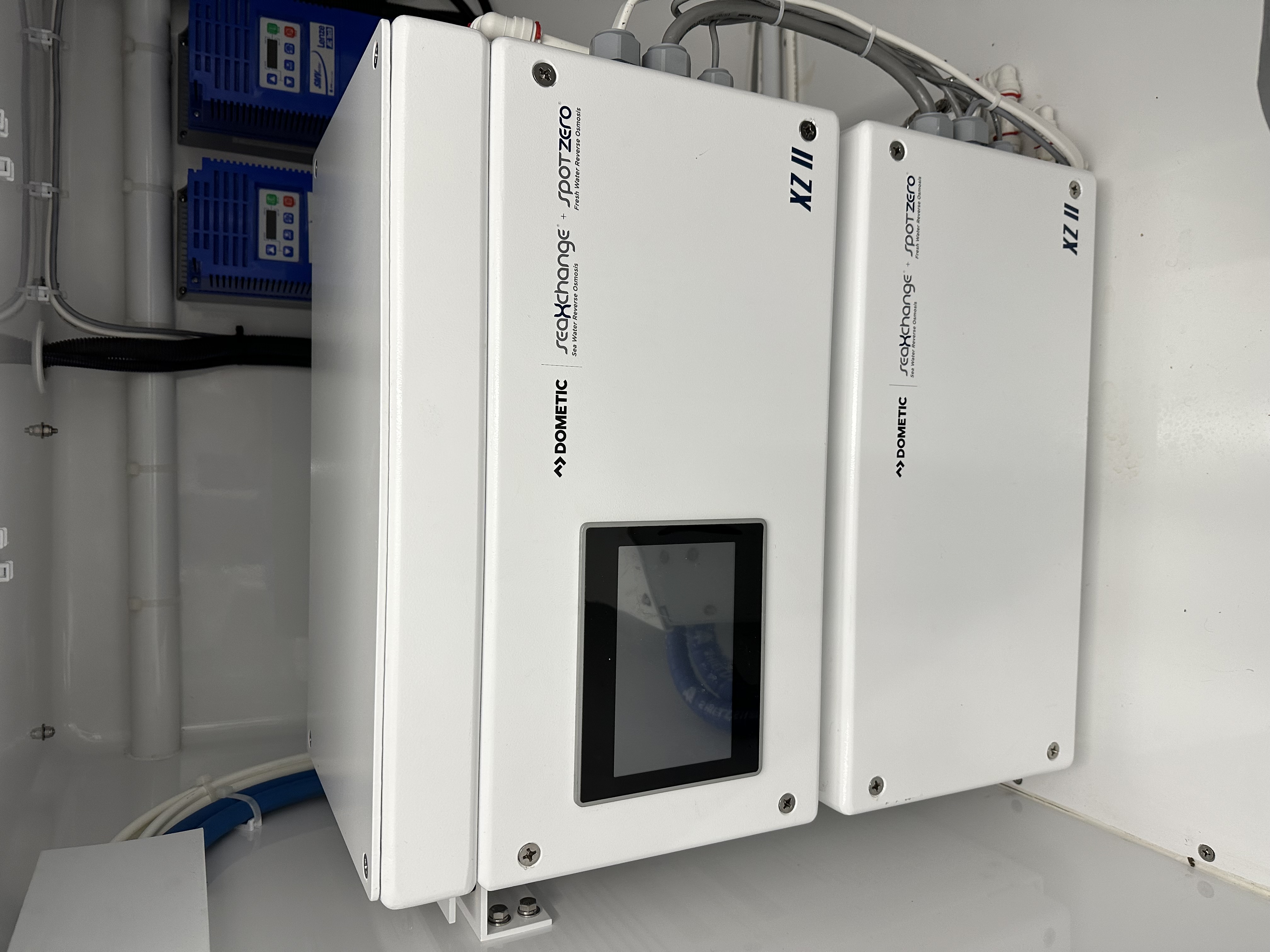
Certain essential minerals and elements play crucial roles in the optimal functioning of the human body, including Calcium, Magnesium, fluoride, Sodium, Iron and Copper. Luckily, there are remineralizer systems made for marine RO systems, such as the system by Spotzero. They offer a post-filtration device known as a bacteriostatic remineralizer to neutralize ph. and re-mineralize the water with healthy minerals. The product water of the RO system simply passes through the post-filter en-route to the ships tank, this device does not reduce pressure or flow rate of the product water by any recordable amount. Even with all the benefits provided by the Spotzero bacteriostatic remineralizer, on average less than 10 ppm is added to the RO product water when passed through the bacteriostatic remineralizer. The system can also neutralize the ph. level- when the product water is sent through the bacteriostatic remineralizer, the few acidic ions interact with the activated carbon components of the filter. This interaction leads to bonding of the acidic h+ ions with free interacting carbon compounds. Chemical bonds are created, and newly introduced compounds result in a neutralization of the ph. Some people prefer the taste of minerals in the drinking water over ultrapure water and the Bacteriostatic Remineralizer uses a unique blend of compounds to reintroduce healthy minerals that amplify taste and promote general water consumption health. Bacteria elimination is another feature of the Bacteriostatic Remineralizer, it uses a filtration agent to prevent harmful bacteria from reproducing and growing within the plumbing lines onboard a vessel.
Choosing the Right Watermaker
Water makers are available in many formats and capacities, with the smallest manually operated survival unit making about six gallons a day, selling for $1,300. An 80 gallon-per-day day 12-volt electric unit costs about $5,000 and a 1,000 gallon-per-day unit starts at around $12,000.
Watermakers are available in manual or automatic operation. Often this refers to the high-pressure regulation and start and stop automation. With a manual watermaker, the operator needs to go the main panel and adjust the high pressure to match the manufacture’s product output capacity, where maximum efficiency is realized. An automatic watermaker regulates the pressure as needed to properly produce fresh water. Both the manual and automatic systems automatically measure the TDS of the product water and prevent non-potable water from entering the freshwater tank. The automatic system is best if you operate the watermaker from the helm or other location without entering the engine or mechanical room to start and adjust the machine.
Before you purchase a watermaker be sure to consider the amount of water you will need on your trips, the ability to store clean water and the ability to generate the electricity to run the water maker. Popular water maker manufacturers include FCI, Spotzero, Blue Water Desalination, Watermakers, Inc., Village Marine Parker, Spectra, Sea Recovery, and others. While a water maker may be a significant purchase, getting access to clean and safe water is not always easy or cheap and making your own is often the most reliable and safest method of keeping your water tanks full.

Dive Deeper into the World of Sportfishing
You’ve just experienced a taste of the exceptional content featured in the pages of InTheBite Sportfishing Magazine. If you found this engaging, you’re in for a treat with our full publication. Whether you prefer the tactile experience of print or the convenience of digital, we have the publication for you.
Visit our subscription page now to join the InTheBite family and elevate your sportfishing experience with every issue.