




Table of Contents
Old Salt: Captain Dave Noling
Captain David Noling says what he likes best about sportfishing, his career for the last 40-plus years, is “you never know what you’ll see” and “you get to fish in loads of really great locations. That’s what keeps you going,” he says. Even on slow days, “if you’re in a good spot, you still have a good chance of getting a bite even late in the day” he added. The perfect story to prove this point happened in 2000 when he skippered the Outrageous, a 52-foot Southern Cross, in the Golden Hook Challenge tournament, off St. Croix, U.S. Virgin Islands. “We were in first place,” Noling said. “My mate was on the ladder as one of the boats called in over the radio that they were hooked up. There were only 10 minutes left in the day. So, my mate says it doesn’t matter because they’d have to get two fish to beat us on time. He barely got those words out of his mouth when the guy on the radio said, ‘It’s a doubleheader.’ What do you know, they got them both. When you’re in a good spot, anything can happen and that’s happened a lot over the years.”
The Early Years in Destin
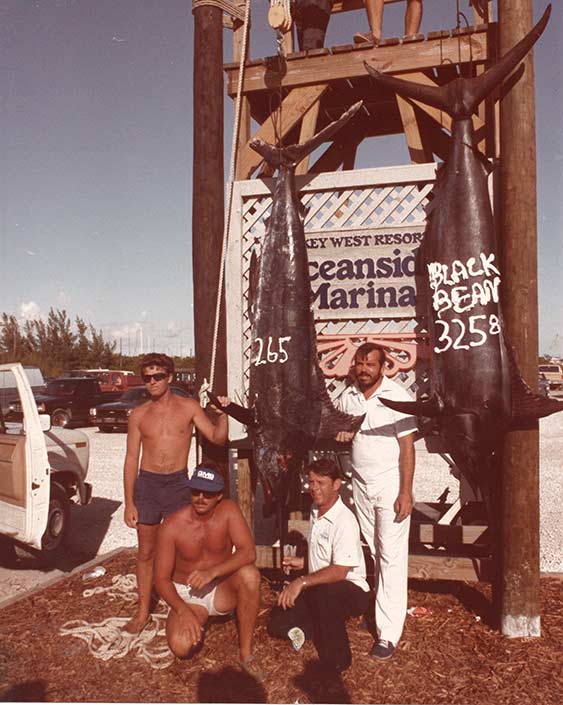
The Florida Panhandle town of Destin was still a sleepy fishing village when a teenage Noling started washing down boats, then mating on the charter and private Hatteras’s, Bertram’s, and Destin-built G&S boats docked at the Marlborough Marina and Sandpiper Cove. He knew from his junior high school days that fishing was what he wanted to do with his life. It certainly helped that many of his teachers had charter boats and would cut him some slack on classroom attendance when he was out mating for them. Beyond that, Noling worked for Capt. Harry Wright on the Dora Lee, Capt. Cecil Woodward on the Molly, and Capt. Tyree Destin on the Judy Lee, all part of the Destin charter fleet in the 1970s.
“I caught my first blue marlin on the 46-foot Hatteras, the Marion II,” Noling said. “I was probably 16 or 17 years old and the only mate there. It was my first time dealing with a 350-pound fish, so that was pretty cool.” He got his captain’s license at age 19 and started bouncing back and forth between mating and captaining.
“I did a lot of cobia fishing out of Destin, then more billfishing,” Noling recalls. “It was pretty much sails and white marlin. We’d catch a blue marlin now and then. You have to remember this was the late 1970s, right around the time we started using lures in Destin. We had heard about the long-time use of lures in Hawaii and then Louisiana and that’s how we got onto it. After that, I started catching a lot more blue marlin.”
Adventures Abroad: From Cozumel to St. Thomas
Like the news of lure fishing spread, so did word of the great fishing in Cozumel, Mexico, especially for sailfish and marlin. Noling first traveled to these sunny shores on the 54 Bertram, Tiger Shark. He later took the Outrageous there too. He’d run straight from Destin, or sometimes from Key West, with the deck loaded with fuel drums and dock boxes. “It was a spring fishery, so we’d go in February and stay there into May,” he said. “Back then I hardly spoke any Spanish. It was about as foreign as you could get. But the sailfishing was good. The marina would be slam full. I got to meet a lot of great people, killer fishermen like Capt. Eddie Herbert and Capt. Jackie Morrow. Everyone was there.”
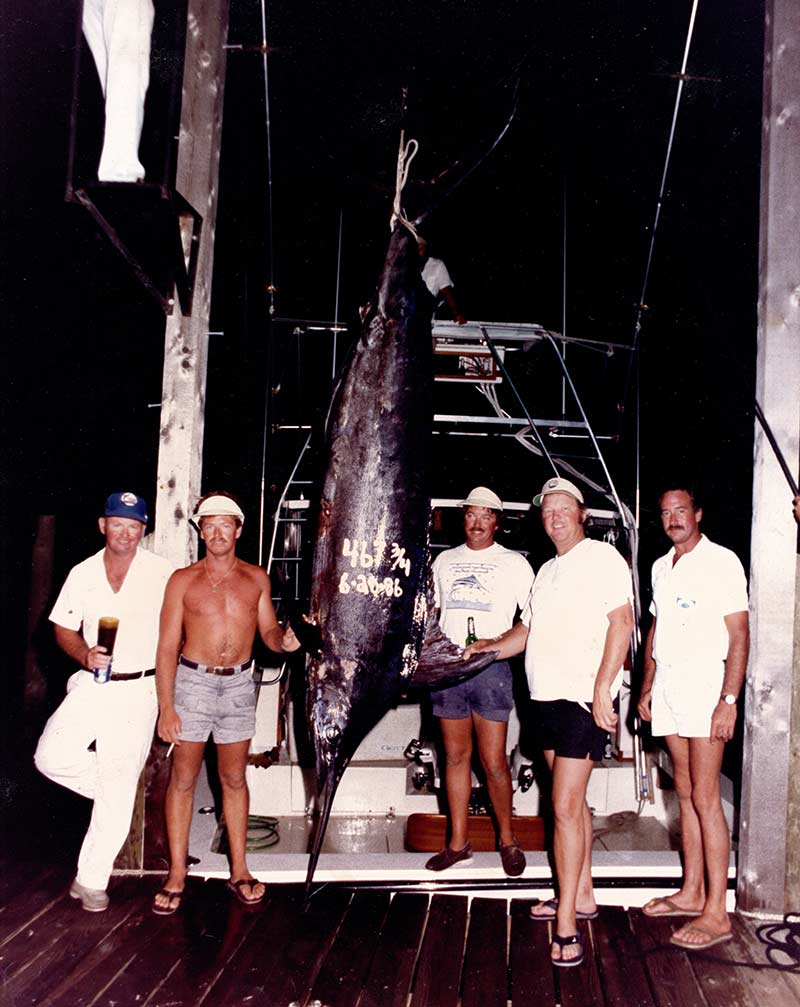
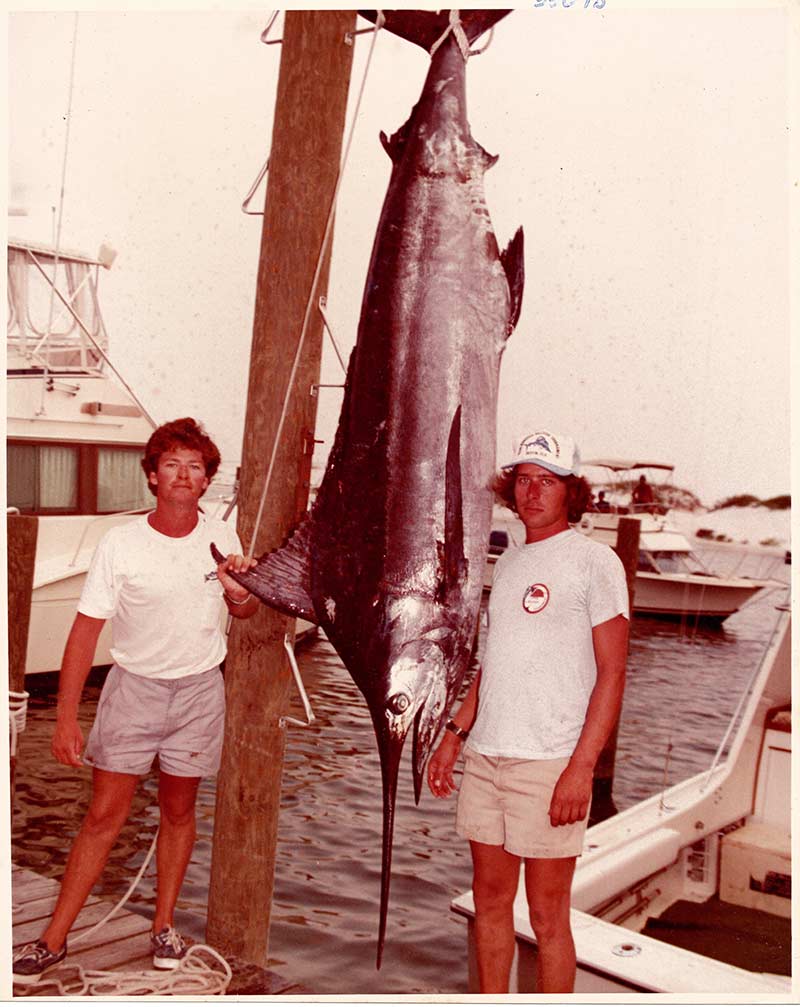
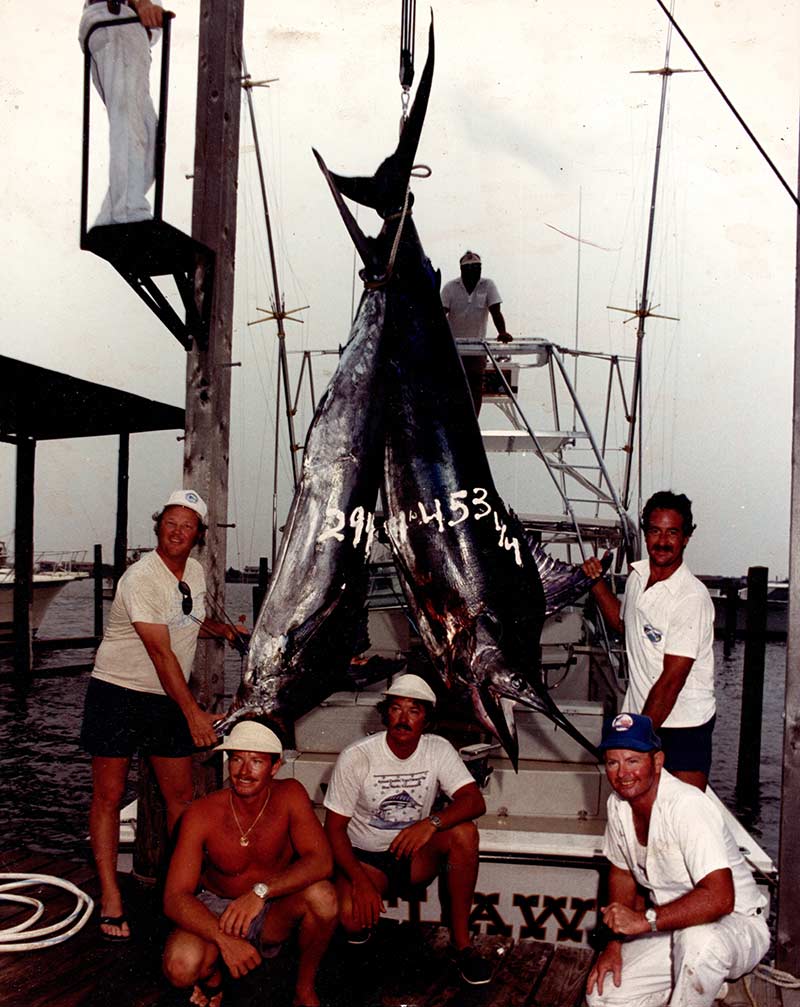
Then, word of the spectacular blue marlin fishing in the Virgin Islands soon reached Noling’s ears. “I like white marlin and sails, but I really like blue marlin,” Noling said. “That’s what brought me to St. Thomas. I first came in 1986 on the DD Dumpling. The owner had two, a 55- then a 65-foot Hatteras, both with that name. The fish were biting as soon as we got there. I caught several big ones, like 500- and 600-pounders. Lure fishing was coming on pretty hard at the time and so were teasers. Capt. Randy Jendersee, Capt. Mike Lemon, Capt. Brad Simonds, and Capt. Frankie Branch, they were my mentors. I was younger than them, but I hung out with them. Catching even close to the number they did was a good day for me.”
One year en route to St. Thomas on the Outrageous, 10- to 12-foot seas and a couple day forecast for a hard blow caused Noling, his wife Tami, and mate Sam Canterbury to make a stop in San Salvador. There wasn’t much to do on the island at that time, so the three decided to go fishing. “We figured we’d fish in the lee of the island where it’s calm,” Noling said. “Once we got out there, I went out past Sandy Point. It got super rough. Everyone wanted to go back where it was calmer, but I said I wanted to do one more troll back off the point. With that, we got one on the teaser. I didn’t think it was that big, maybe 400 pounds. Tami hooked it. Sam’s reeling in the other line when he hooks a little guy, about a 150-pounder. We caught him pretty quick. As we did, Tami says she’s about out of line. She had a big 80-wide reel, and sure enough, she was about out of line. We get him on the leader straight up and down. Sam is pulling and pulling. Suddenly, he comes flying out of the water. It was an 800- to 900-pounder. It was one of the biggest fish I’ve ever caught.”
In the early 1990s, Capt. Dave’s annual circuit spanned Cozumel in the spring, St. Thomas in the summer and Venezuela in the fall. “You always heard it’s a giant white marlin fishery in Venezuela, which it is, but it’s a big grab bag there too,” he said. “There are blues, whites, and sails, and quite a few of them. The whites were migratory. You would hardly see a white marlin in the springtime, but the blue marlin and sail bite was full on. After a year or two we changed it up. I started fishing Venezuela in the spring and fall, and St. Thomas in the summer.”
A Record-Breaking Captain
In 1996, while captaining the 48-foot Garlington, Courtesan, Noling set the Atlantic Ocean record for the number of blue marlin released in a year, 297. “I didn’t go to St. Thomas that year,” he said. “I wish I had as they were biting, and we’d have gone over 300 releases. We got double, triple, and even quadruple headers on blue marlin in Venezuela, so it added up quickly. We also caught two or three slams every day, so many it wasn’t a big deal. Then, throw in spearfish here and there you’ll get Super Slams. One day, we caught 10 blues, a white, and a sail. I’d caught more than that in one day, many more, but I have to say it was one of my favorite days because we went 12-for-12 and I had my wife fishing with me. Back then I was fishing about 250 days a year on average. We fished with the owner, we’d charter, and we’d go out even if we didn’t have a charter. Fuel was 15 cents a gallon, so we weren’t spending any money.”
During these years, Noling participated in ESPN’s Billfishing Xtreme Release League series of tournaments, hosted by Capt. Norm Isaacs. He captained one of the six- to 10-boat teams that fished in exotic destinations including the Dominican Republic, Puerto Rico, the Virgin Islands, St. Martin, and Antigua, with millions in prize money. They won several times.
Venezuela was a special place for Noling, but the good times didn’t last. A devastating mudslide and political dictatorship spelled the end of Americans traveling to Venezuela to fish. Noling stayed until 2003, then headed west to pick up the Double Trouble, a 60-foot Hatteras, in Cabo and work on her for the next several years south to Costa Rica. “Los Sueños was the place to go,” Noling said. “It was just getting developed. Back then, it was a November to April or May fishery for sailfish. This was before the FAD and seamount fishing. Now, there’s an incredible summertime bite for blue marlin.”
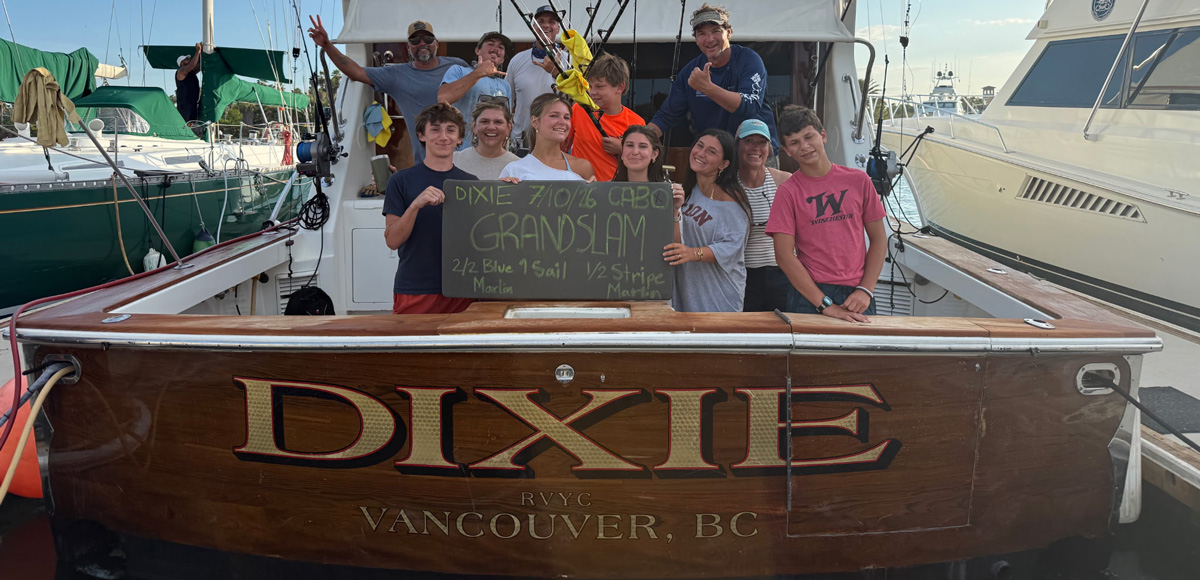
2005 proved especially successful on the tournament circuit for Noling and the Double Trouble when they claimed the Los Sueños Signature Triple Crown Series championship title. Then came the World Billfish Series championship, where Tami Noling enjoyed her personal best day and her first Pacific Grand Slam on the tournament’s last day by catching four sailfish, two blue marlin, and a striped marlin. “She was the only woman fishing it,” Noling said. “When she goes up to get her awards, they have this giant man’s watch. She’s like, ‘You didn’t think some dumb old girl was gonna win this, did you?’ She won a Mercedes, the watch, and all kinds of stuff.”
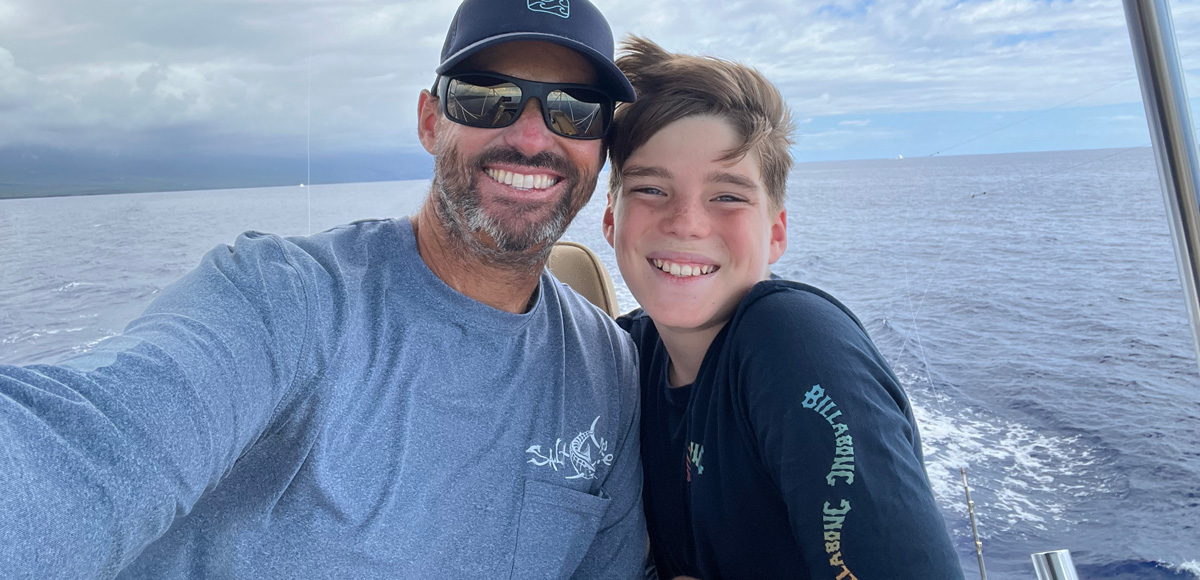
Today, Noling drives the 68-foot Viking, Double Shot, owned by Byron Burris, his wife, and twin 11-year-olds, who all enjoy sportfishing. In the late summer of 2023, the Rockport, Texas-based team won the first tournament they entered, the Scrub Island Invitational Billfish Series, with 13 blue marlin released over the two legs. The boat spent the Christmas holidays at Marina Cap Cana in the Dominican Republic, with plans for 2024 to either stay in the Atlantic or head to the Pacific.
Adapting to Change
Live baiting, lures, circle hooks, pitch baiting, and the use of 360-Sonar are all changes in sportfishing that Noling has experienced over his career. They have helped him win tournaments, earn honors like AFTCO Tag Flag Captain of the Year several times, and be inducted into the Texas Maritime Museum’s Perry R. Bass Memorial Sports Fishing Wall of Fame. “The first time I tried live baiting was out of Destin,” Noling said. “It was at an oil rig off Louisiana. We went two-for-three on blue marlin, with one 400-pounder. That was the late 70s and early 80s, about the time lures were coming on.” Then in the late 1990s, dredge fishing and circle hooks came onto the scene, changing everything.
“It was probably 50/50 between those who hated it and those who loved it,” Noling said. “Those who fought it would take one look at it and think they’d never hook anything on that. But nobody wanted to gut hook fish. As it turned out, circle hooks are even better than J-hooks. Now everybody uses them.” Capt. Chip Schafer, Capt. Jimmy Grant, Capt. Mike Brady, and Capt. Hans Kraaz were the masters who mentored Noling in circle hooks and dredges for catching sails and white, and a few blue marlin, in locales such as South Florida, Isla Mujeres, and Venezuela.
Pitch-baiting quickly became something Noling also enjoyed, especially in locations like St. Thomas where the fish are aggressive. Omni-style sonar is now a must-have and is responsible for adding extra releases to the scoreboard for the Double Shot in the 2023 Scrub Island tournament. “Sonar is something else,” Noling said. “I wouldn’t fish way off the edge like we do now without having sonar. I get out there in that deeper water and mark fish. You see the red blob on your sonar, turn the boat real sharp, and go right to him. It’s fish I would have never caught, never have trolled by.”
Yet, there remains today a strong human element to sport fishing. “The biggest thing is going to the right spot,” Noling added. “You could make a giant mistake or be the hero. That’s still the big deal. If there’s nothing there, the sonar isn’t going to pick it up. That means paying attention to things like water temperatures, current edges, birds, and all that. Sonar isn’t a magic bullet.”
Looking to the Future
Noling has called Rockport, Texas home for the past 20-plus years, an ideal place for both hunting and fishing. “I’ve fished Hawaii and Australia a little bit, but would love to go back,” he says. “I’ve always wanted to fish Brazil. I had a few chances but could never pull it off. The Azores and Cape Verde are on the list too. Anywhere there’s lots of blue marlin.”
This storied journey of Captain David Noling serves as an inspiration to all who share a love for sportfishing, proving that the thrill of the catch never fades.
Dive into the Rich Heritage of Sportfishing with our InTheBite Old Salts’ Series
Each story a tribute to the wisdom, adventure, and lifetime achievements of the sportfishing captains. Explore the archives and anchor yourself in the legacy of these revered captains. Click Here

Dive Deeper into the World of Sportfishing
You’ve just experienced a taste of the exceptional content featured in the pages of InTheBite Sportfishing Magazine. If you found this engaging, you’re in for a treat with our full publication. Whether you prefer the tactile experience of print or the convenience of digital, we have the publication for you.
Visit our subscription page now to join the InTheBite family and elevate your sportfishing experience with every issue.